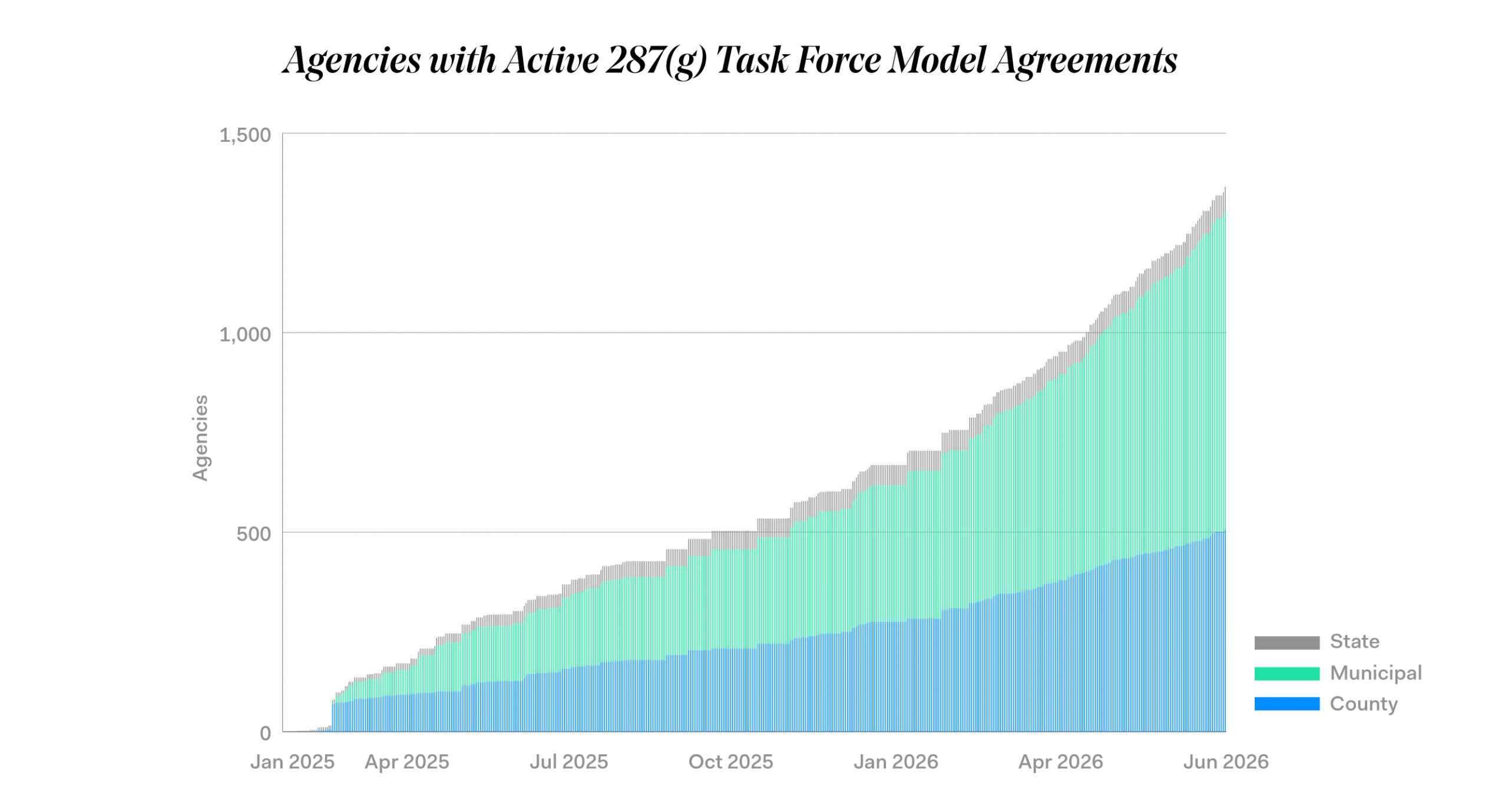
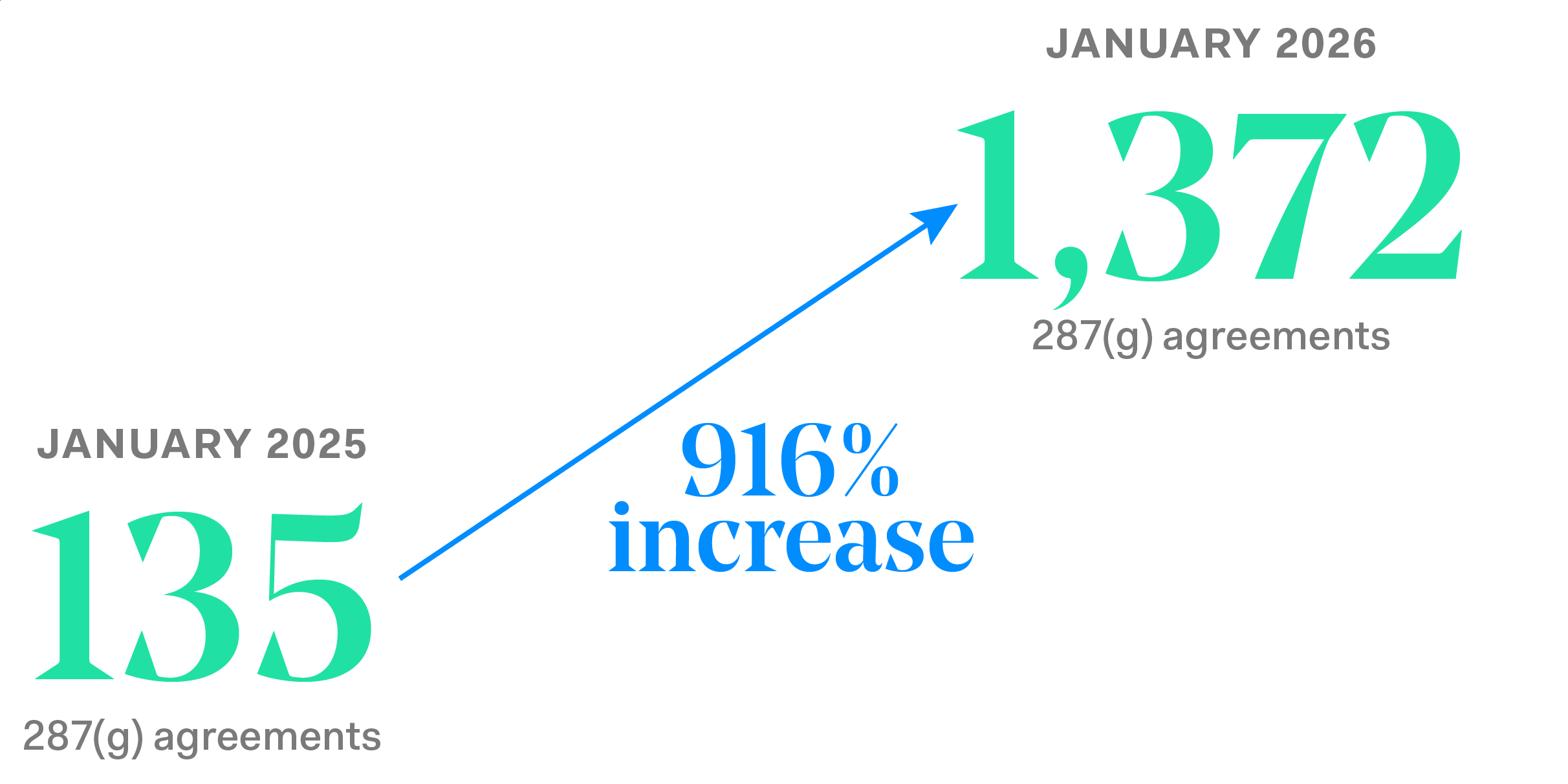
FIGURE 3: THE TRUMP ADMINISTRATION HAS PUSHED UNPRECEDENTED AND EXPLOSIVE GROWTH IN TASK FORCE MODEL AGREEMENTS

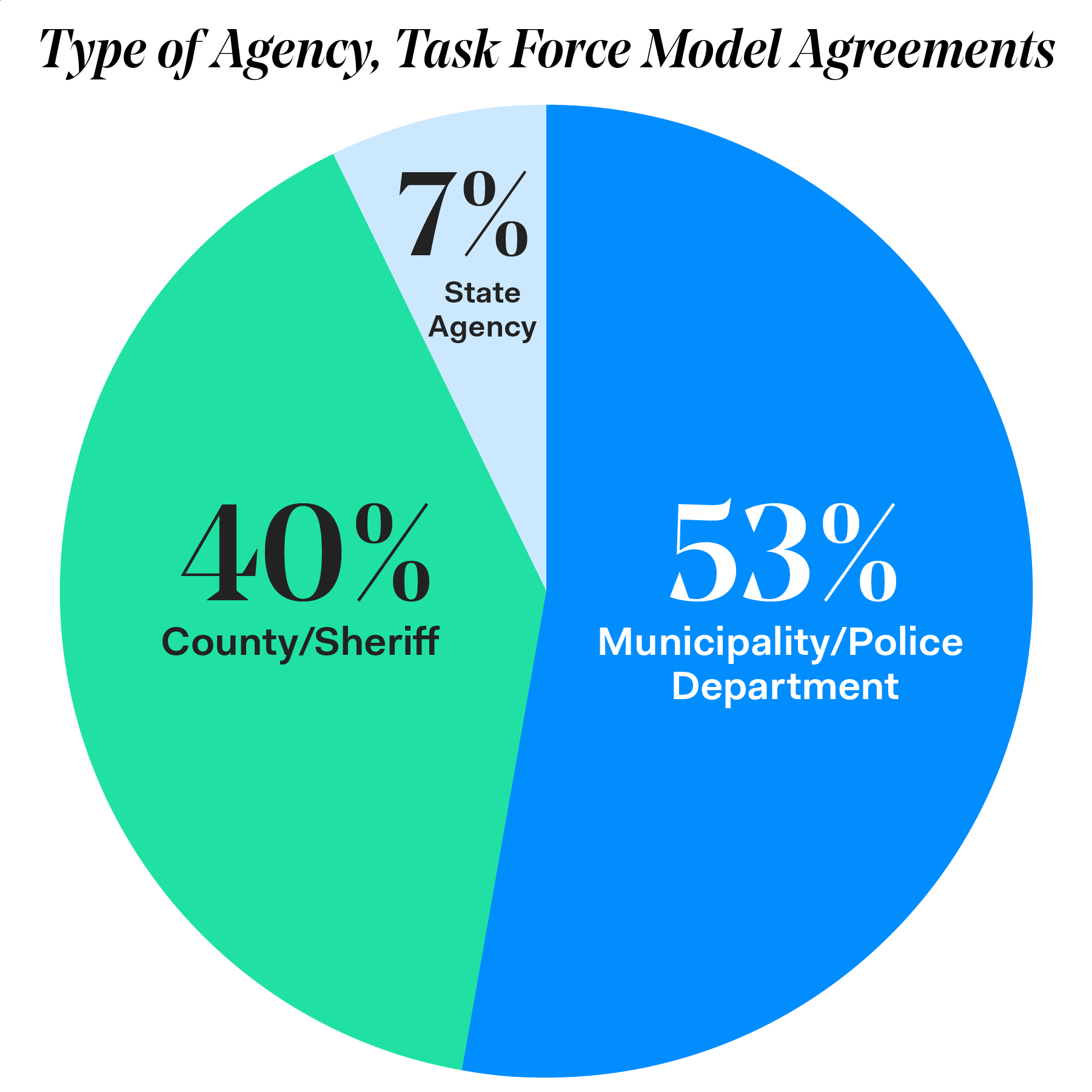
Although in the past police departments were legally able to apply for 287(g) agreements, it was extremely rare for them to do so, with the vast majority of 287(g) agreements made with sheriffs. Under the second Trump administration, this has changed significantly. In fact, the majority (53%) of currently participating agencies are police departments, run by municipalities, rather than sheriffs departments run by counties. This greatly expands the scale and scope of the program, as there are approximately 12,000 local police departments, compared to only 3,000 sheriffs departments, and a commensurately greater number of sworn officers employed by local police departments. After the funding announcement, the National Fraternal Order of Police issued a statement urging departments to sign up for all three models, and highlighting the financial support in the Task Force Model.
FIGURE 4: POLICE DEPARTMENTS MAKE UP MAJORITY OF TASK FORCE MODEL AGREEMENTS
When announcing the new funding model in September 2025, ICE reported that 8,501 local law enforcement officers had already been trained under the Task Force Model — or approximately 18 per agency — and that 2,000 more were being trained. Since then, an additional 296 agencies have signed up for the Task Force Model. If they send similar numbers of officers for training, this would mean that between 13,800 and 15,800 police officers and deputies across the country are now deputized by ICE and trained to target immigrants, or anyone who they think looks like an immigrant. This is an even larger increase in force than the 12,000 new officers and agents hired directly by ICE since Trump’s second inauguration.
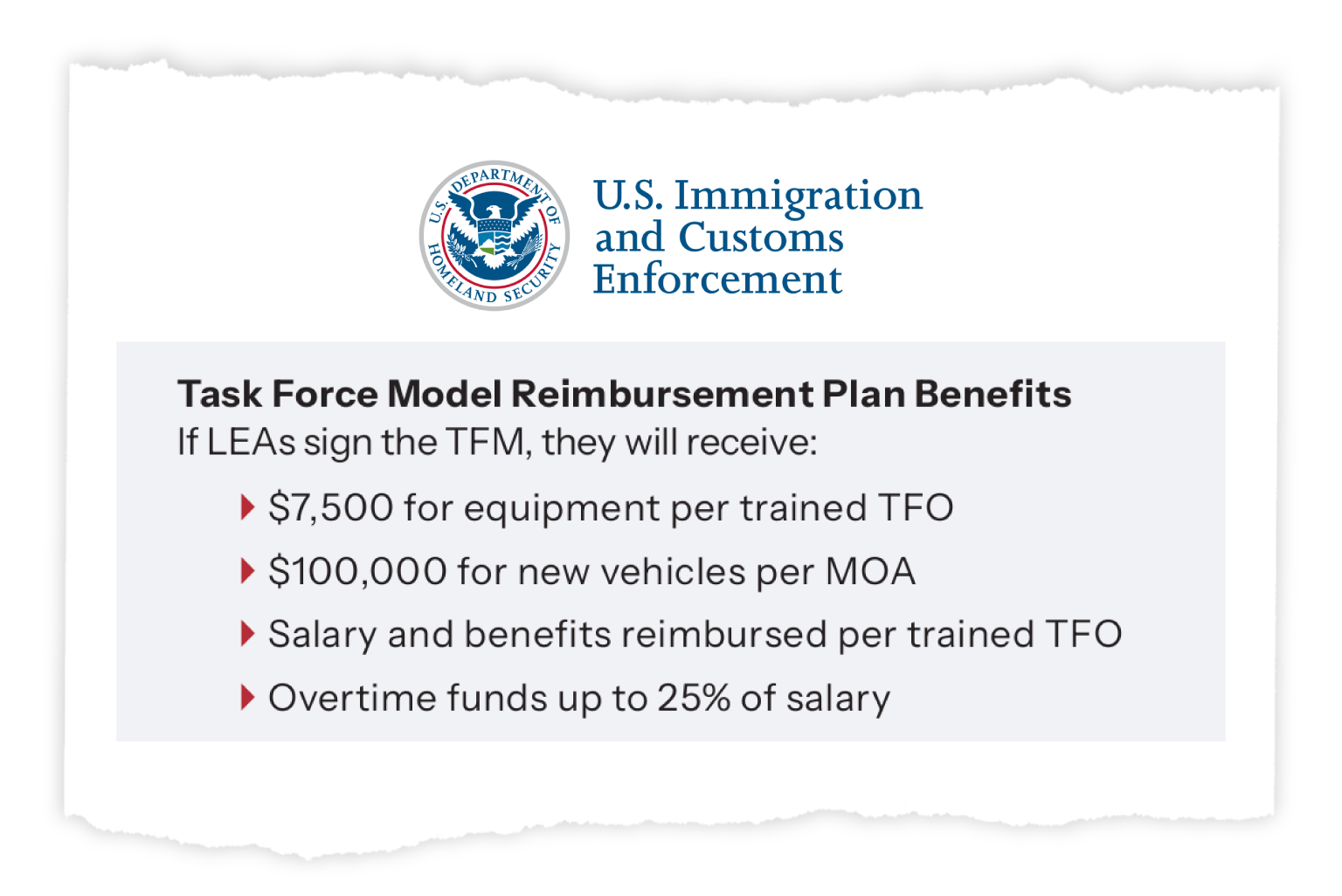
Money is clearly a key component of this system. At a minimum, to fund equipment and vehicle costs for agencies that signed up before October 1, 2025, we estimate that ICE has already distributed $137 million to 517 agencies. If ICE honors its commitments to fully reimburse salaries and benefits for agencies who sign up for the Task Force Model, and provides “performance” bonuses, this would result in an unprecedented transfer of federal dollars to local and state law enforcement. For agencies signed up before October 1, we estimate this would result in an additional $1.42 billion transfer to local law enforcement in 2026. If the agencies who have signed up between October 1 and January 26, 2026 are included, this would equal an additional $58 million in funding for equipment and vehicles, $483 million for salaries and benefits, and $18 million for “performance” bonuses. All told, just based on the current agencies signed up, this could mean a transfer of between $1.4 and $2 billion to local law enforcement in 2026.
If realized, this amount would dwarf all other federal funding for local law enforcement. The two largest pots of federal money going to local police and other state and local law enforcement were COPS spending at $665 million in FY24, and JAG-Byrne funds at $346 million in FY24. Even with conservative estimates, this funding could double federal funds to local law enforcement.
FIGURE 5: FEDERAL FUNDS SET TO GO OUT UNDER 287(G) TASK FORCE MODEL DWARF RECENT FEDERAL FUNDING TO LAW ENFORCEMENT
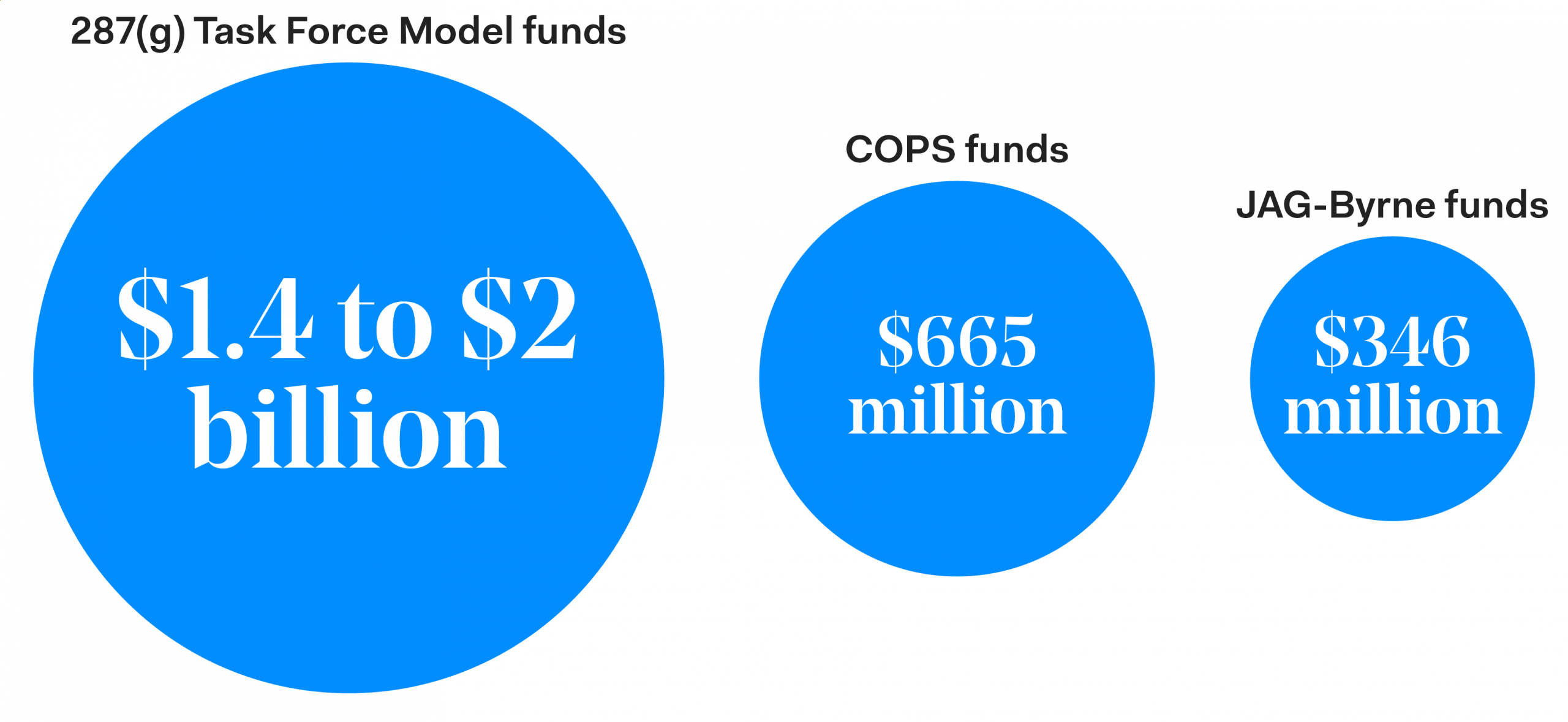
If agency sign-ups continue at their current pace or even faster and are funded by ICE for all the promised benefits, this funding would continue to balloon. For example, if the current pace of sign-ups continues for an additional year, 2027 funding could grow to a total of $3.6 billion in 2027, funding 31,000 law enforcement officers deputized by ICE across the country.
What Does This Mean for Communities Across the U.S.?
ICE refers to 287(g) agreements as “force multipliers” and pushing billions into local law enforcement with a mandate and incentives to harass and arrest people who may appear to be immigrants is an enormous multiplier of force against Black and Brown people in this country. In the last year, ICE and CBP have arrested over 380,000 people, including an 11x increase in arrests on the street. The administration has set a quota of arresting 3,000 people a day or over 1 million people a year. Because 287(g) agreements are spread across the country, as we will explore more in a future brief, their rapid expansion greatly increases ICE’s ability to meet their quotas and puts immigrants at risk in communities far outside the urban areas the administration has publicly targeted for ICE surges.
At the same time, the massive infusion of federal funding into local law enforcement could expand local police departments and sheriff’s offices in a way not seen since the 1990s. From 1995 to 1999, the federal government sent nearly $1 billion per year to state and local law enforcement agencies to hire more police officers through the COPS program. While studies have found that funding had no or very modest impact on crime, it did significantly increase arrests for drug possession and other low level offenses, and coincided with a period of militarization of police around the country. These harms persisted even after the funding was reduced. This new money comes with very little training or oversight, and in a period of increasing criminalization despite record crime declines. It will allow local and state law enforcement agencies to expand their budgets in unaccountable and harmful ways. Once in place, these agreements and budgets become the new baseline and will be very hard to unwind.
This is alarming on its own, but particularly in conjunction with the large body of research showing the harms 287(g) agreements can have even without the expansion of funding. In addition to the direct racial profiling documented in counties running the original Task Force Model, research found spillover effects of increased racial profiling in nearby areas that were not covered by an agreement. Other documented negative impacts include increased chronic absenteeism of children from school, decreased employment, worsened mental health, and increased vulnerability of immigrants to crime in counties with 287(g) agreements during the earlier TFM era. All of these negative effects were not balanced by any positives: these programs had no measurable effect on crime.
As shocking as this rapid expansion is, we have seen periods of increased criminalization and federal funding that led to increased attacks on Black and Brown people before. The public pushed back, and experienced a 15-year period in which incarceration and crime rates declined simultaneously, including decreases in violent crime rates in states that reduced imprisonment while rates went up in those that did not. Now we must recognize these threats for what they are and push back forcefully again, refusing to participate in or banning 287(g) agreements, tracking and understanding the impact of agreements when they are made, and rejecting funding that institutionalizes and incentivizes harm.