The criminal justice system in America is at a pivotal crossroads. After reaching its peak in 2009, the U.S. prison population fell by nearly one quarter (22%) and policy changes that had been adopted to safely reduce incarceration were working in red, blue, and purple states across the country. Criminal justice reforms that were championed by lawmakers on both sides of the aisle were not only expanding freedom and opportunity for tens of millions of Americans, they were ushering in an era of unprecedented public safety. From 2009 to 2023, 38 states reduced both their imprisonment rate and their crime rate.
Protecting Safety and Defending Justice


Turning the Tide on Mass Incarceration
After nearly 40 years of uninterrupted growth, the U.S. prison population reached its peak of more than 1.6 million in 2009.1 As a result, the number of people in prison declined 22% between 2009 and 2023.2 The total number of people incarcerated, including local jail populations, has dropped 20% since reaching its peak of almost 2.4 million people in 2008.3 This represents over 464,000 fewer people behind bars in 2023.4 But this is only a fraction of the number of people whose lives were positively impacted: absent the reforms that led to these reductions, over 50 million more people would have been admitted to prison and jail over this period.5
The number of people on probation and parole supervision has also dropped 26% since its peak in 2007, allowing many more people to live their lives free from onerous conditions that limit their ability to find and keep a job, secure housing and, too often, channel them back into incarceration for simple rule violations.6
The number of people in prison has dropped by 22% since 2009
Number of people in prison, 2009-2023
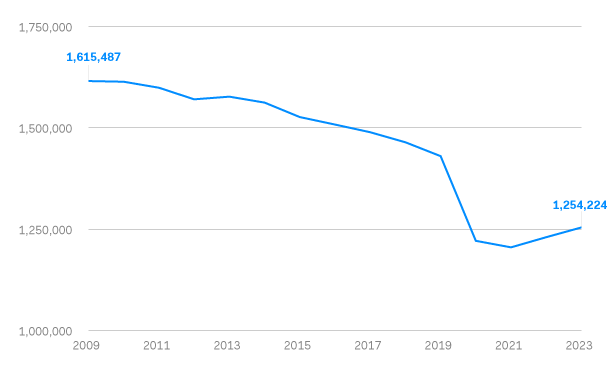
Source: Bureau of Justice Statistics, National Prisoner Statistics program, 2009-2023
Advancing Safety and Justice Together
The past decade plus of incarceration declines were also accompanied by major improvements in public safety. From 2009-2023, 38 states saw reductions in crime while incarcerating fewer people, with violent crime rates falling 8% in states that reduced imprisonment while going up 16% in states that increased imprisonment. Public safety and a fairer criminal justice system are not in conflict.
This milestone policy achievement occurred in red, blue, and purple states alike. States that decreased imprisonment and crime together in this same period include:
- South Carolina had a 42% decrease in its imprisonment rate and 31% decrease in its crime rate;
- Connecticut had a 52% decrease in its imprisonment rate and 63% decrease in its crime rate;
- Texas had a 26% decrease in its imprisonment rate and 12% decrease in its crime rate;
- Virginia had a 35% decrease in its imprisonment rate and 34% decrease in its crime rate;
- Oklahoma had a 17% decrease in its imprisonment rate and 40% decrease in its crime rate;
- California had a 46% decrease in its imprisonment rate and 21% decrease in its crime rate.
38 states reduced their crime rate and imprisonment rate since 2009
States reducing crime and imprisonment rates, 2009-2023
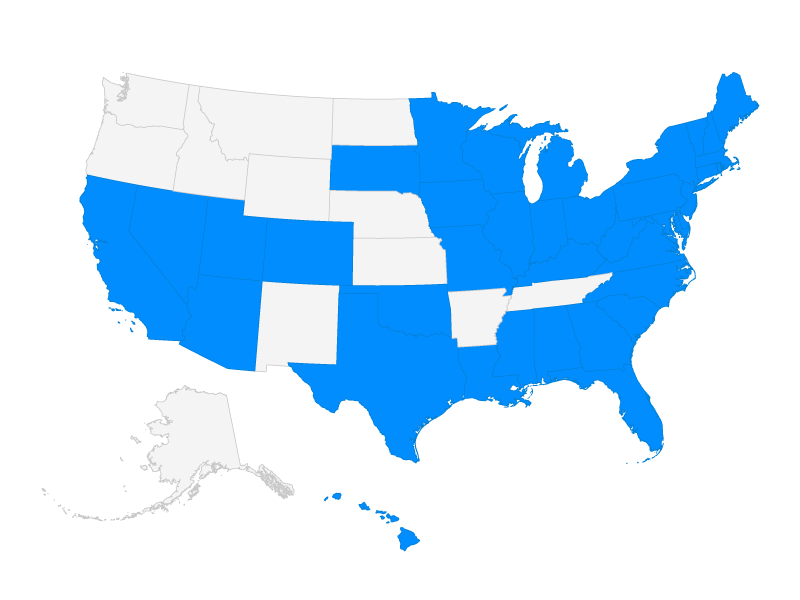
Source: FBI Uniform Crime Reporting Program, 2009-2023; Bureau of Justice Statistics, National Prisoner Statistics program, 2009-2023
Overall, the national crime rate declined 39% from 2009 to 2023.7 Today, both violent and property crime rates are at historic lows. In 2024, the violent crime rate declined by 4% to its lowest level since 1969 and 6% lower than in 2019 before two years of pandemic driven increases.8 The homicide rate fell by 16% in 2024, making it the largest year-over-year decline ever recorded.9 Property crime has been on a steady decline for nearly three decades and fell another 8% in 2024, the lowest recorded since 1961.10
Property and violent crime rates are at historic lows
Property crime rate per 100,000 residents in the United States, 1960-2024
Violent crime rate per 100,000 residents in the United States, 1960-2024

Source: FBI Uniform Crime Reporting Program, 1960-2024
Black imprisonment rate drops by nearly half
The concerted effort to reduce our prison population has had the most impact on the group that paid the greatest price during the rise of mass incarceration: Black people, and particularly Black men.
Though Black people are still disproportionately represented in prison and jail, the past decade of criminal justice reform has produced meaningful gains for Black communities. The Black imprisonment rate has declined by nearly half since the country’s peak rate in 2008.11 The Hispanic imprisonment rate declined substantially as well, dropping roughly 1.6 times faster than the white imprisonment rate.12
For Black men, the lifetime risk of incarceration declined by nearly half from 1999 to 2019–from 1 in 3 Black men imprisoned in their lifetime to 1 in 5. While still unacceptably high, this reduction in incarceration rates means that Black men are now more likely to graduate college than go to prison, a reverse from the decade before that will disrupt cycles of incarceration and poverty for generations to come.
The Black imprisonment rate has dropped 45% since 2008
Imprisonment rates per 100,000 adults in the United States, by race, 2008–2023
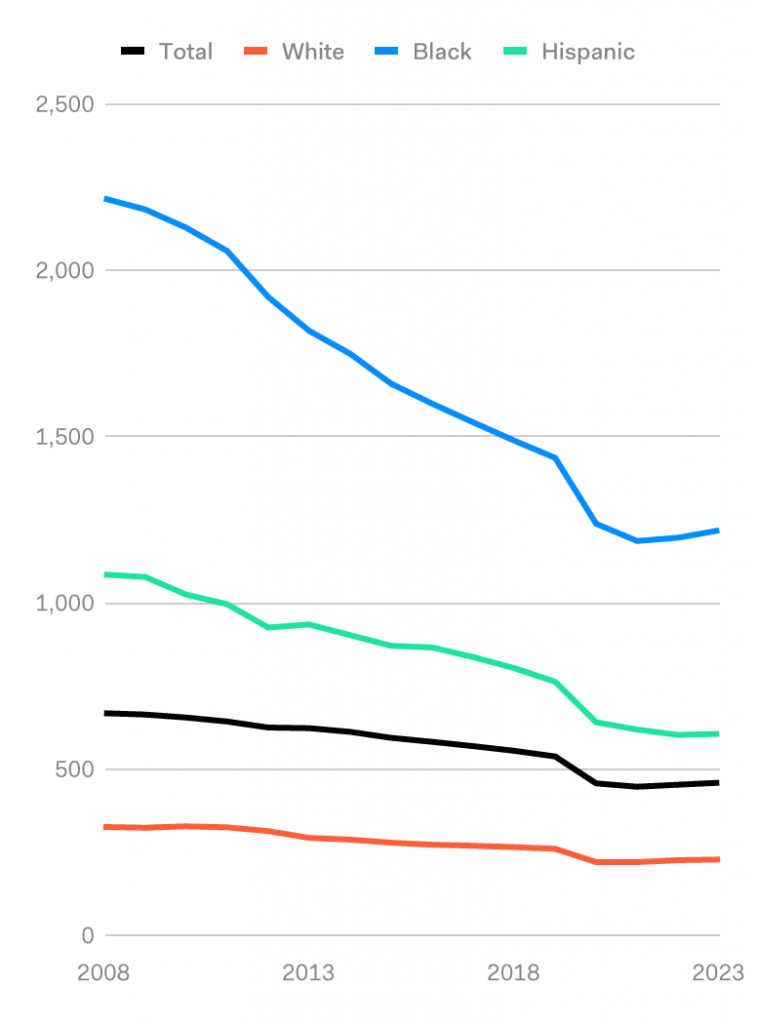
Source: Bureau of Justice Statistics, National Prisoner Statistics program, 2008-2023
Make no mistake: mass incarceration and the racial and economic disparities it drives continue to shape America for the worse. The U.S. locks up more people per capita and imposes longer sentences than any other large country. Nearly 1 in 2 adults in the U.S. have an immediate family member that has been incarcerated, with lifelong, often multigenerational, consequences for family members’ health and financial stability. In fact, new research shows that families spend more than $4,000 each year just to stay in touch with and support their family members behind bars and that on the whole mass incarceration costs families nearly $350 billion every year.
While the vast majority of the gains in safely reducing incarceration are still holding, the prison population has risen each of the last two years for which we have data, and rollbacks of successful reforms along with harmful new policy changes in numerous states are likely to fuel a reversal unless policymakers act. At the national level, federal law enforcement agencies and even the military are being deployed to cities by the Trump administration, resulting in mass arrests for low-level crimes in addition to unprecedented criminalization of immigrants.
We have a robust body of research built over decades showing that jail stays and long prison sentences do not reduce crime rates. And fortunately, research on what does work to reduce crime and keep communities safe is expanding all the time. The evidence is clear: our focus must be on continuing and accelerating reductions in incarceration and investing in what actually works to improve public safety.
A Pivotal Moment for Safety and Justice
There is a large and growing body of evidence that investments in community-based programs that increase access to healthcare, drug and mental health treatment, affordable housing, and education and job training for youth are all more effective than increasing incarceration at reducing crime and preventing reoffending. For example, one study found that Medicaid expansion, which helps increase access to behavioral health care, reduced arrests by as much as one-third (32%) and drug arrests by up to 41%. For people coming home from prison, enrollment in Medicaid reduced reincarceration by 16% and increased employment by 25%.
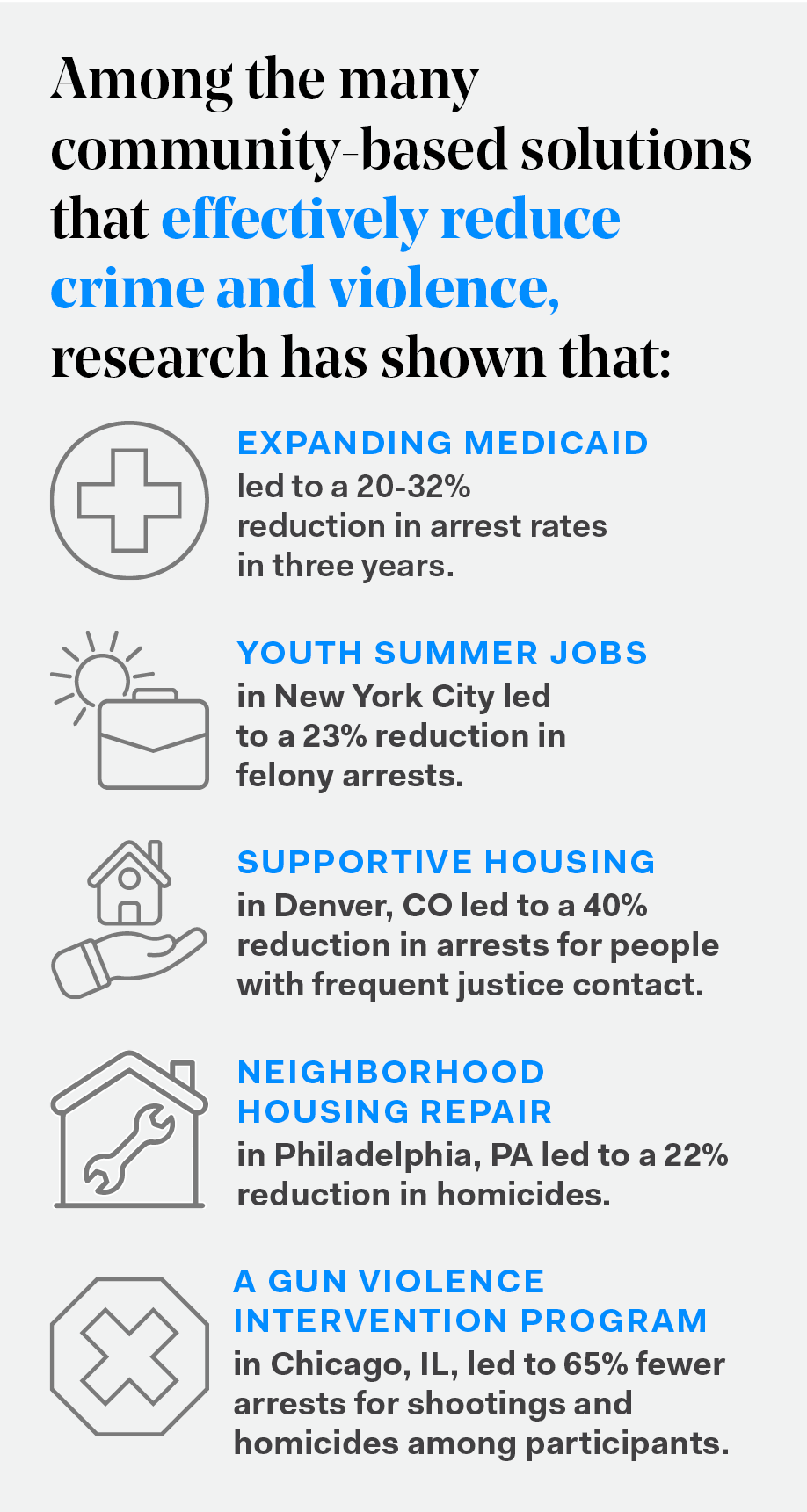 When it comes to gun violence, research suggests that homicides increase when people, particularly young people, are forced out of work and school. On the flip side, programs that create opportunities for young people, provide access to affordable housing, and invest in community spaces are all effective at reducing violence and making communities safer. In New York City, youth participation in a summer jobs program decreased young people’s chance of any arrest during the program summer by 17%, and the chance of a felony arrest by 23%. In Denver, a randomized control trial demonstrated that providing supportive housing for people with frequent justice system contact resulted in a 40% reduction in arrests. A multi-year study in Philadelphia found a nearly 22% reduction in homicides associated with support for low-income homeowners and a nearly 30% reduction in gun violence associated with cleaning up vacant lots.
Community-based violence intervention programs have also been shown to interrupt cycles of violence by working with members of the community to mediate disputes and prevent retaliatory gun violence. A rigorous study of a gun violence intervention program in Chicago showed it led to 65% fewer arrests for shootings and homicides. Despite the rhetoric from the Trump administration, preliminary statistics show Chicago will likely record its lowest number of homicides in more than a decade in 2025. Other cities such as Baltimore have adopted comprehensive violence prevention strategies that rely on more of a public health approach and seen major reductions in violent crime and incarceration. Since 2020, homicides have fallen 40% in Baltimore and earlier this year the city recorded the lowest number of monthly homicides in its history.
These gains are being threatened by massive funding cuts to the public safety infrastructure in the United States. In April, the Department of Justice cancelled more than $500 million in federal grants to local and state governments, non-profits, and other community-based organizations working to improve public safety across the country. More than $168 million of these cancelled grants, the largest amount of any funding area, were supporting community safety and violence intervention programs.
Continued Support for Reform
While the political environment has undoubtedly shifted in the past few years, the public continues to believe that we need more criminal justice reform, not less. Polling by Gallup shows that by a nearly 2 to 1 margin respondents prefer addressing social and economic problems rather than strengthening law enforcement to reduce crime. This is particularly true among key voting groups. The Pew Research Center has found that nearly 9 in 10 Black adults say policing, the judicial process, and the prison system need to change for Black people to be treated fairly.
Polling conducted by FWD.us ahead of the 2024 presidential election found that support for criminal justice reform – specifically reducing the number of people in jail and prison – remained high in both major political parties despite the Trump campaign’s soft-on-crime attacks. We found that 72% of all voters and 80% of Black voters believe it’s important to reduce the number of people in jail and prison. And more than 8 in 10 voters, including nearly three-fourths of Republican voters, support criminal justice reform.
Despite much hand-wringing and commentary on how the politics of crime have defined elections over the past two years, these exceptionally high levels of support have proven not only to be durable during the 2022 midterm and 2024 presidential election cycles, they are higher than they were in 2022 and voters in key battleground states such as Georgia, Pennsylvania, and Michigan support reform just as much or more than voters nationally. Furthermore, this is not only a blue state phenomenon: recent polling in West Virginia and Mississippi show that a majority of Republicans in these very conservative states believe it’s important to reduce the number of people in jail and prison.
A supermajority of voters want to reduce the number of people behind bars
Percent of respondents who responded positively to the following question, by party affiliation

Source: FWD.us National Polling on Support for Criminal Justice Reform, 2024 (Conducted by Benenson Strategy Group)
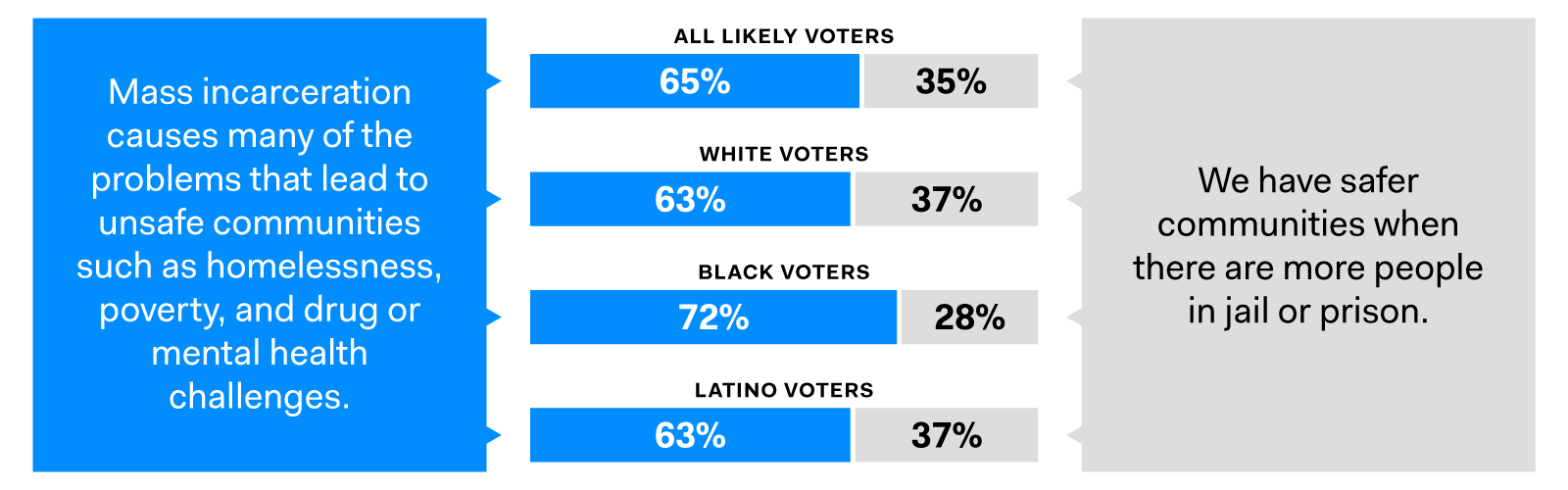
While many factors are contributing to these high levels of support, Americans increasingly recognize that high incarceration rates do not make us safer and that mass incarceration contributes to social problems such as homelessness, public drug use and drug overdoses. In fact, voters are much more likely to say that mass incarceration makes communities less safe than they are to say that we are safer with more people locked up.
By a 2 to 1 margin voters believe mass incarceration makes us less safe
In general, which of the following statements comes closer to your view, even if neither is exactly right?
Source: FWD.us National Polling on Support for Criminal Justice Reform, 2024 (Conducted by Benenson Strategy Group)