
New Polling Shows Criminal Justice Reform is a Winning Issue for 2024 Election

In Partnership With

Key Insights

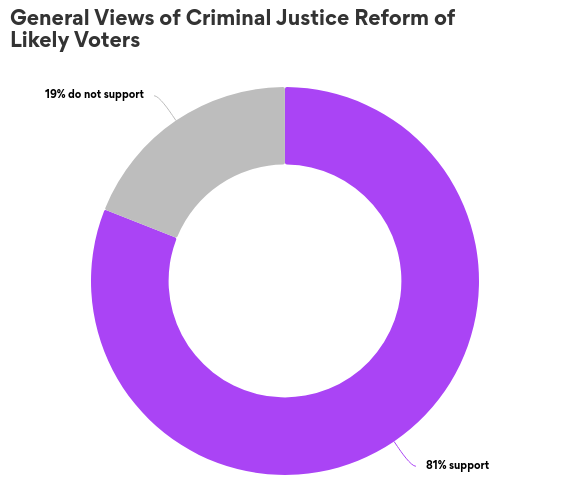
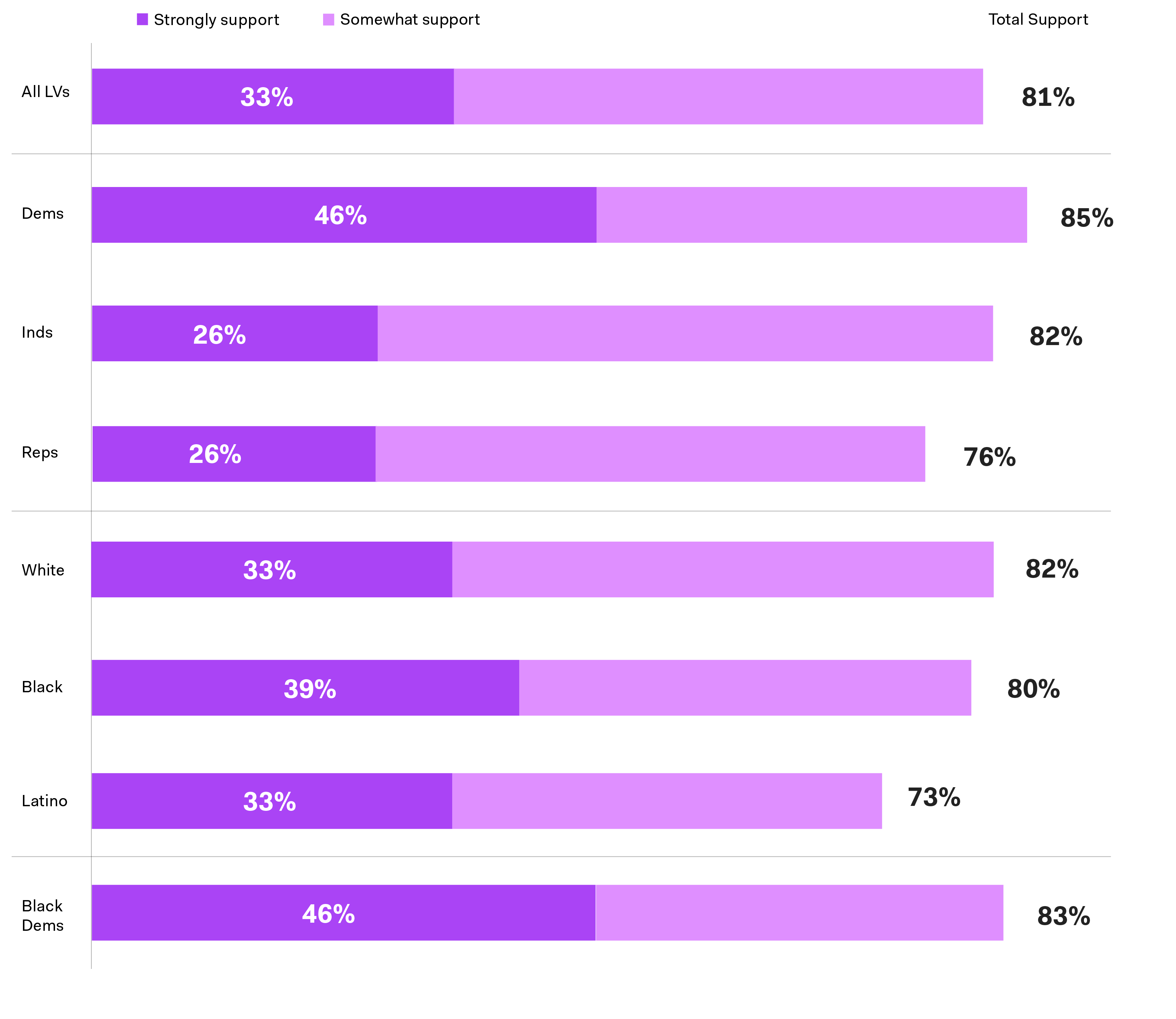
Recent polling, conducted by BSG on behalf of FWD.us, reveals widespread, bipartisan support for criminal justice reform. A significant 81% of likely voters support criminal justice reform, with a third "strongly" in favor. This support transcends political affiliations: 76% of Republicans, 82% of Independents, and 85% of Democrats back reform. It spans racial demographics as well, with strong endorsement from white, Black, and Latino voters. This support also carries across battleground states, with 77% of AZ voters, 74% of GA voters, 81% of MI voters, and 80% of PA voters supporting criminal justice reform.

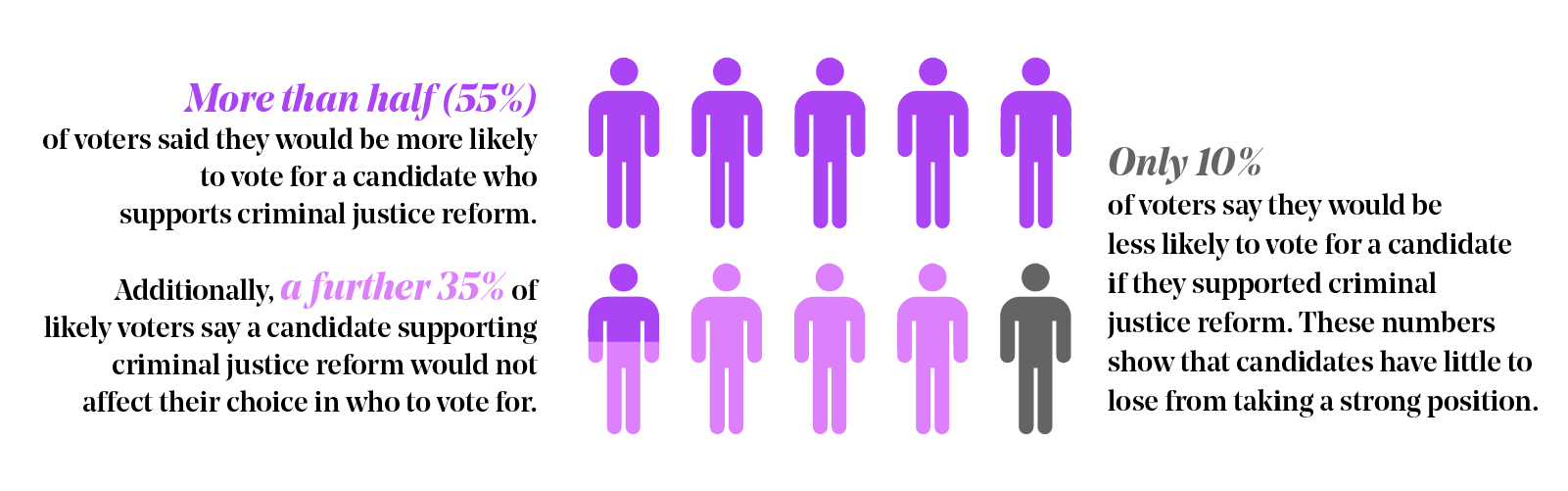
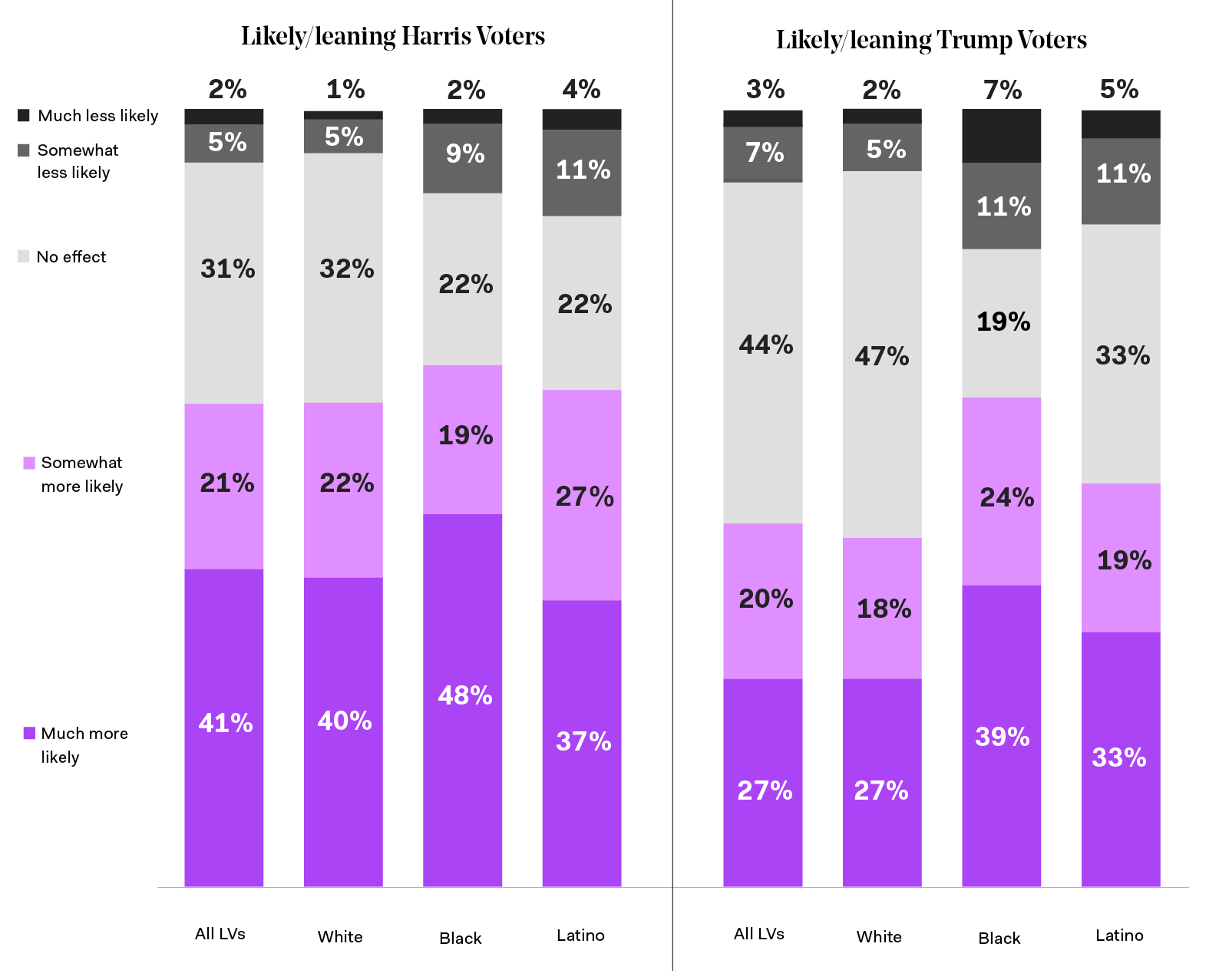
In an election that is likely to be determined by a small margin in a few battleground states, these numbers show both candidates for president can win crucial votes by taking a strong position on criminal justice reform. In fact, by a margin of more than 5 to 1, supporting criminal justice reform makes voters more, not less, likely to vote for a candidate.

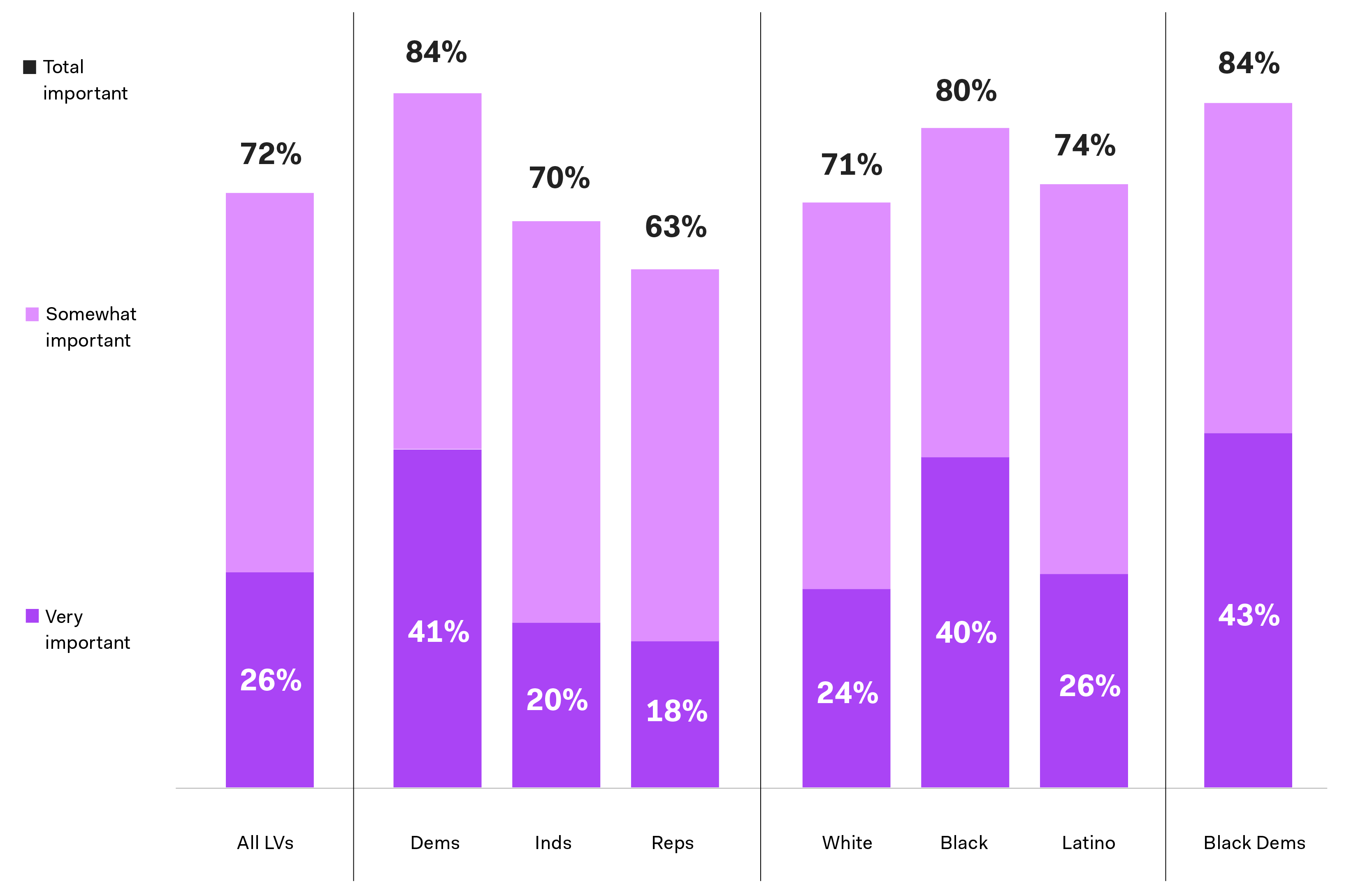
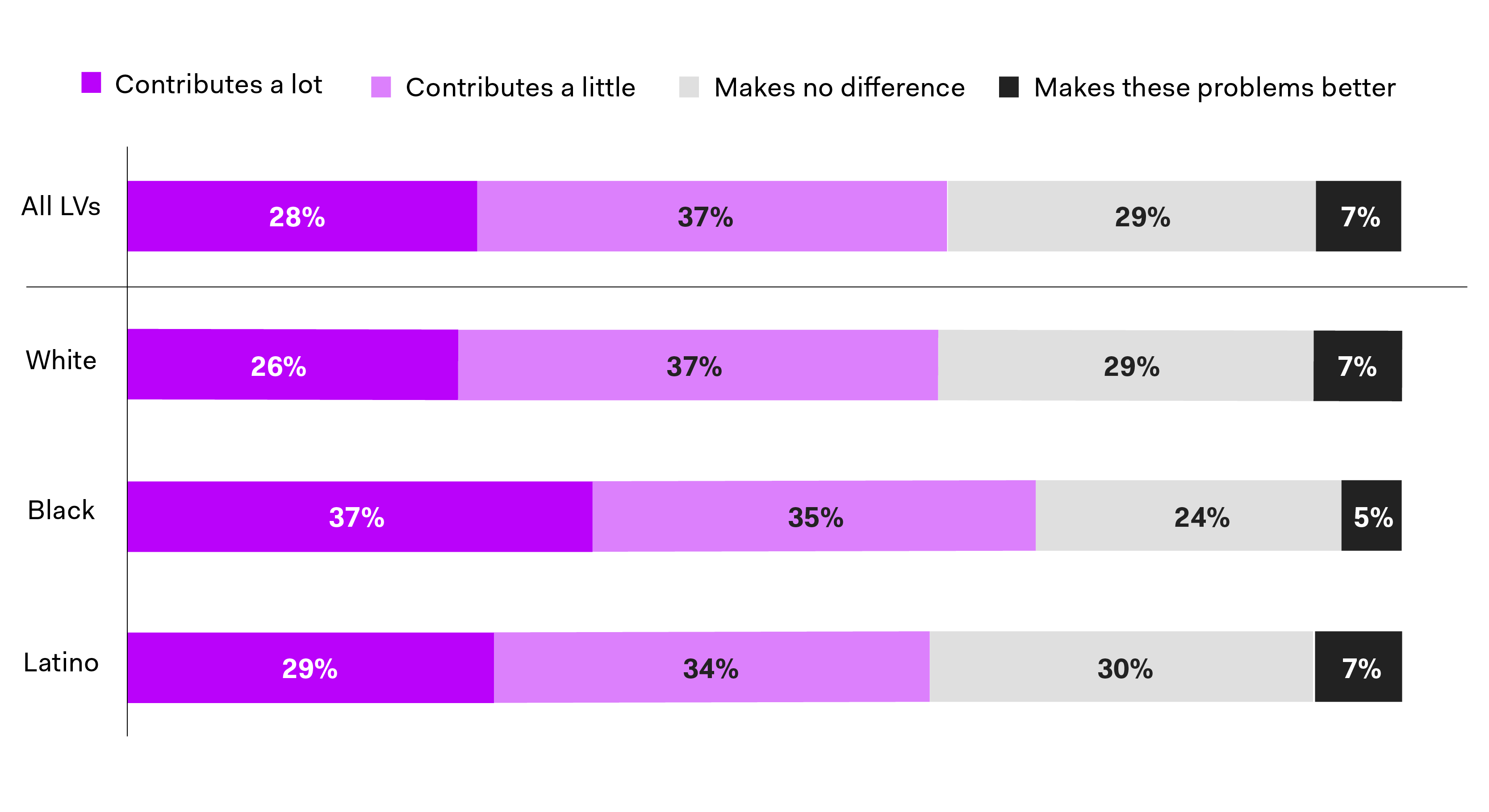
Support for criminal justice reform includes support for bold policies to reduce incarceration. Among likely voters, 72% believe it is important to reduce the jail and prison population in the United States, including 84% of Democrats, 70% of Independents, and 63% of Republicans. There is also widespread recognition that mass incarceration contributes to making problems like homelessness, public drug use, and drug overdoses worse. A strong majority, 65% of voters, say mass incarceration contributes to these problems and just over a quarter say mass incarceration contributes a lot to these issues.
General Views of Criminal Justice Reform

81% of likely voters support criminal justice reform

Support for Candidates

Would you be more or less likely to vote for [Kamala Harris/Donald Trump] if you knew [she/he] had taken a strong position in support of criminal justice reforms to reduce incarceration rates?

Support for Reducing Incarceration

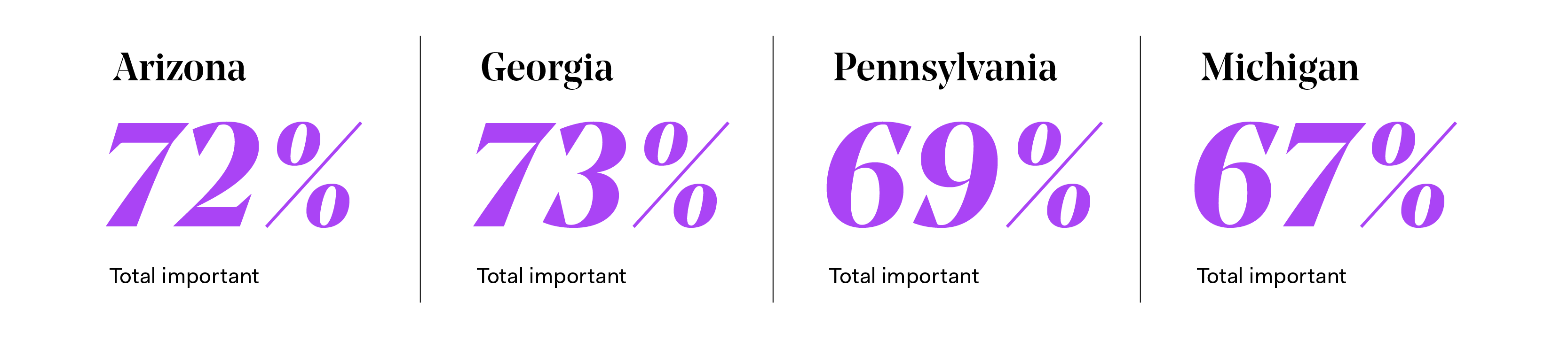
Nearly 3-in-4 believe it is important to reduce the jail and prison population in the U.S., including over 60% of Republicans and large majorities of Americans of color, particularly Black Democrats. Similar shares of voters in battleground states also believe it is important.

In your opinion, how important or unimportant is it to reduce the jail and prison population in the United States?


Impact of Mass Incarceration

Voters are much more likely to say that mass incarceration makes communities less safe than they are to say that we are safer with more people locked up.

In general, which of the following statements comes closer to your view, even if neither is exactly right?

In addition, when asked how much they think mass incarceration contributes to social problems, nearly 2 in 3 respond that it worsens them, as opposed to only 1 in 14 who believe that locking more people up alleviates issues of homelessness, drug use, and overdoses.

And how much do you think mass incarceration contributes to social problems such as homelessness, public drug use and drug overdoses?

Support for Federal Criminal Justice Reforms

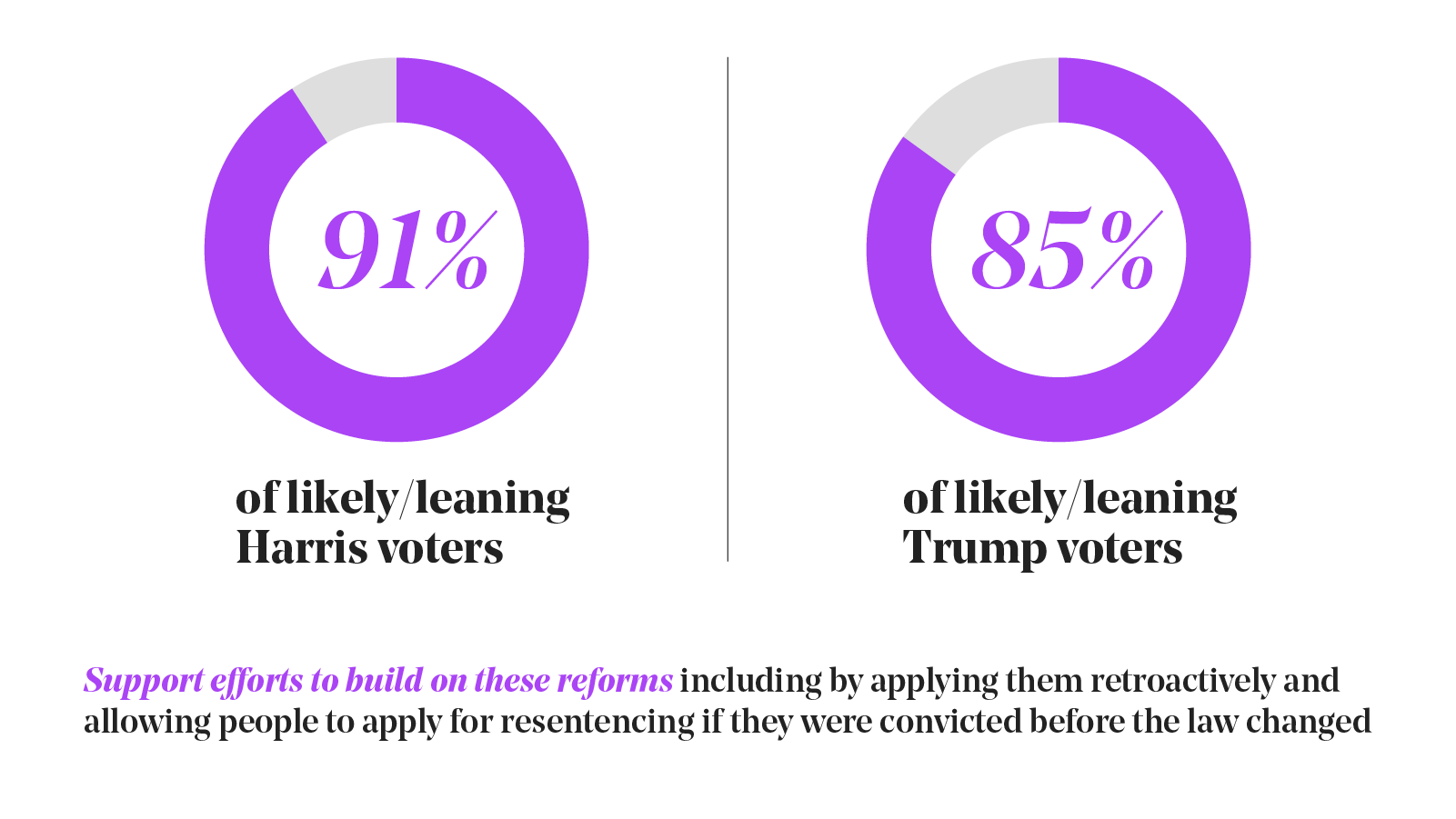
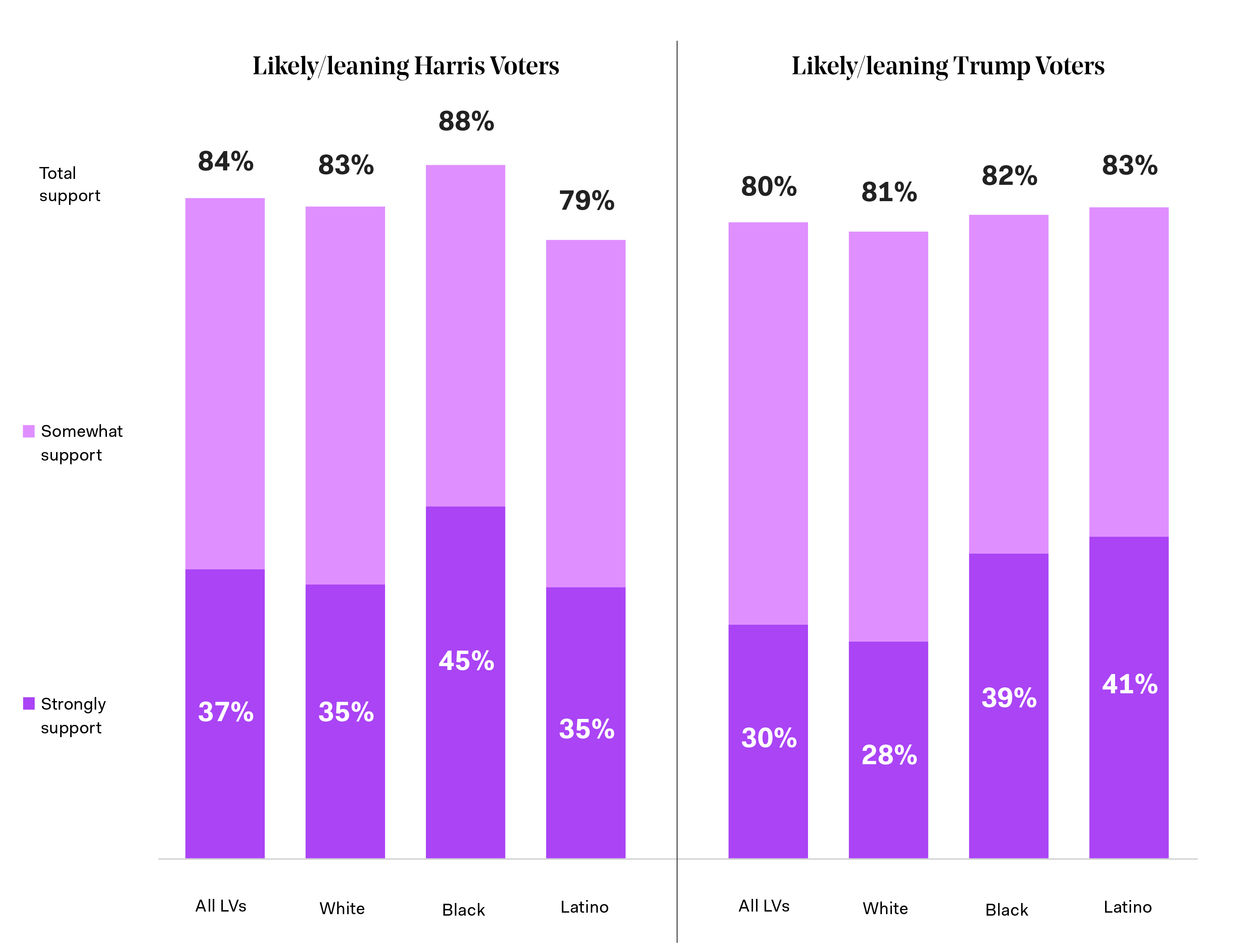
In 2018, then-President Donald Trump signed/ then-Senator Kamala Harris voted in favor of the First Step Act, which was a bipartisan effort to reduce the size of the federal prison population and promote rehabilitation over incarceration. Research has shown that 30,000 people have been released because of the First Step Act and that reoffending rates are lower among this group than among people who did not benefit from the law change. Knowing this, would you support or oppose efforts to build on these reforms including by applying them retroactively and allowing people to apply for resentencing if they were convicted before the law changed?

Would you support [your candidate] increasing the number of commutations through executive clemency, which is the authority presidents have to reduce prison sentences, if he/she is elected?

Support for Reforms to Reduce Incarceration

A majority of voters across party lines support a broad array of policies to lower incarceration rates.

% who support each policy change
All Likely Voters
Dems
Inds
Reps
Earned Time: Increasing the amount of time that people can earn off their prison sentence for following prison rules and participating in rehabilitation programs.80%87%80%74%
Second Look 10 Years: Allowing judges and prosecutors to review cases after a person has served at least 10 years in prison and reduce the sentence on a case-by-case basis.79%87%75%75%
Reduce Pretrial Detention: Ending the practice of keeping people in jail before their trial if they have been charged with a nonviolent offense75%82%74%69%
Drug Law Reform: Reducing criminal penalties for possession of controlled substances and treating drug use as a public health issue73%81%72%65%
Parole Expansion: Allow more people in prison to be considered for release by a parole board72%81%69%66%
Eliminating Mandatory Minimums: Eliminating mandatory minimums and other sentencing laws that require a long prison sentence rather than allowing judges to determine the appropriate punishment based on the facts of the case70%82%69%60%
Overhaul Probation and Parole: Ending the practice of sending people to prison for violating the rules of probation or parole (for example, failing a drug test or missing a meeting) if a new crime has not been committed65%75%63%57%
Reduce Sentence Enhancements: Reducing the number of years that are added to a prison sentence for sentence enhancements, such as second and third strike laws, which require judges to increase the sentence, sometimes up to life in prison, if the person has prior felony convictions60%68%58%55%

BSG conducted an online survey of n=1496 likely voters nationwide, including an oversample of n=355 Black voters and n=308 Hispanic voters. The poll fielded from September 17-24, 2024. The sample was
weighted to ensure it was proportionately representative of likely voters nationwide. The overall margin of sampling error is ±2.53% at the 95% confidence level. BSG also conducted 4 state-level polls in AZ, GA, MI, and PA from September 17-26, with n-sizes of 542, 550, 544, and 566, respectively. The margins of error at the 95% confidence level are ±4.21%, ±4.18%, ±4,20%, and ±4,12%, respectively.

Tell the world; share this article via...