To: Interested Parties
From: Todd Schulte – FWD.us
Re: The House is Set to Vote On An Incredibly Unpopular, Harmful Reconciliation Bill — What You Need to Know
Date: June 8, 2026
TOPLINE
As soon as today, the House may move to vote on the Senate-passed $70 billion ICE & CBP funding bill. At a time when voters remain rightly outraged at ICE, providing hundreds of billions of dollars to ICE and CBP to terrorize communities and tear families apart while the cost of living rises and health care funding is slashed is both a stunning policy failure, and incredibly unpopular with voters. This vote also comes despite some Senators promising to block the so-called “weaponization” fund and immunity settlement — something the Senate bill did not do.
This is a historically unpopular bill — ICE remains at historical disapproval ratings, and voters have continuously demonstrated their anger with the administration’s priorities. With this funding, ICE’s core budget line items would increase by approximately 500% for years to come. The U.S. would be on track to spend a quarter trillion dollars in the next few years on immigration enforcement — an annual budget equivalent to all but a half dozen militaries in the world.
Not only does it fail to address the skyrocketing cost of living, the most important issue currently motivating voters, it actually makes life more unaffordable for families across the country. Every Member should vote against it — and because of expected attendance issues, it appears likely that every single Republican may in fact be the deciding vote on this wildly unpopular bill that would ensure terrible harm for years to come.
Democrats have rightly held the line, seized public opinion, and should continue to drive a hard contrast against this wildly unpopular bill. The following messaging guidance is based on continuing public opinion research. For more information, research, or questions, please reach out to the team at FWD.us at press@fwd.us.
WHAT THE BILL DOES
The reconciliation bill hands ICE and CBP another $70 billion — on top of the $200 billion they received just last year, of which over $100 billion unspent. The largest single line item is roughly $30 billion for ICE with almost no conditions attached — allowing them to proceed with their plans to build warehouse jails, continue their attack on DACA recipients and immigrants with legal status, and to terrorize families and communities. It is supercharging and prefunding mass deportation efforts about which the White House immigration czar Tom Homan said, “you ain’t seen shit yet.”
The specifics of the bill are incredibly unpopular, with opposition even stronger to this bill when voters see these efforts are financed by unprecedented cuts to health care, especially at a time when costs of living are skyrocketing, Americans are livid that the administration is focused on terrorizing communities, guaranteeing record profits for private prison companies like those profiting off Delaney Hall or the immigrant family jail at Dilley — instead of actually prioritizing what voters want, which are policymakers trying to make life easier and more affordable for them.
Voters do not support this administration’s ICE actions and are deeply angry at the administration’s focus on this as a central priority. This is the core contrast and the most effective frame with persuadable members and voters.
- The same reconciliation bill that gave ICE $75 billion cut $911 billion from Medicaid. Three in four voters oppose Medicaid cuts, including 53% of Republicans and 72% of swing voters.
- Trump's immigration policies are already driving up costs. FWD.us estimates mass deportation and permit cancellations will cost the average American family $2,150 more per year by 2028. Forcing workers out of critical industries like construction, agriculture and food service — the industries that set prices for everyone — will lead to grocery bills rising from $165 to $195 per week. A new home would cost $48,000 more.
- While gas prices sour, this administration is slashing health care to give ICE and CBP a quarter trillion dollars to make life more cruel and expensive.
This bill, despite promises by numerous Senators and House members that they would use this legislation to block such efforts, does not stop Trump's anti-weaponization slush fund or immunity clause. Moving this bill removes the last likely check on such actions from Congress. This is an extremely unpopular, party-line exercise; not one Democrat has supported it.
ICE AND CBP DON'T NEED ANY MORE MONEY — AND SWING VOTERS AGREE
Last year's reconciliation bill gave DHS $191 billion — the largest immigration enforcement funding surge in American history. ICE alone received $75 billion, nearly nine times its annual budget. More than $100 billion of that remains unspent, enough to fund the entire department through the fourth quarter of 2027, and this reconciliation bill would put the U.S. on track to spend a quarter trillion dollars in the last three years of the Trump administration — more annually than all but six militaries in the world.
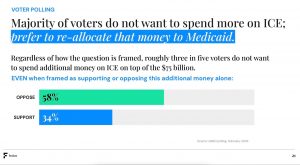
The public remains strongly opposed to ICE, the focus on mass deportations, and this bill:
- Only 33% of Americans approve of how ICE is doing its job; 59% disapprove (UMass Amherst).
- Trump's approval on immigration flipped from 51% approve / 44% disapprove in March 2025 to 43% approve / 52% disapprove one year later.
- House Ways and Means Chair Jason Smith warned that pots of money for ICE and Border Patrol "aren't really popular things" with Americans.
- Sen. Ted Cruz acknowledged that voters will voice their discontent in the upcoming election: "There's a very real chance we'll lose at least the House, and we may lose the Senate, too."
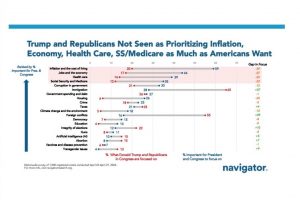
THE PUBLIC IS DEEPLY CONCERNED ABOUT CORRUPT CONTRACTS
Congress is being asked to send tens of billions more to an agency with no public accounting of how the first $191 billion was spent; a process so riddled with concerns about paydays and conflicts of interest that the administration has launched at investigation into the contracts, including around tens of billions for mega warehouse jails. This is in addition to the already existing $22 billion DHS slush fund, which has no line items, no oversight, and no reporting requirements.
EVERY MEMBER SHOULD VOTE NO
The message is straightforward: this bill cuts health care to pay for hundreds of billions for ICE and CBP to terrorize communities and rip apart familes, does nothing to address the cost of living, means more money for private prison companies and those the President wants to support via this new fund. A yes vote means owning whatever comes next — there will be no ability to course-correct. Americans, rightly, are strongly opposed to this bill; every Member should vote no. For more information, questions or for further comment, please reach out to FWD.us at press@fwd.us.
