Loading...
June 18, 2025
Just a Minute
on Quotas
Bad premises beget worse policies. Spend just a minute with us so that we can do better.
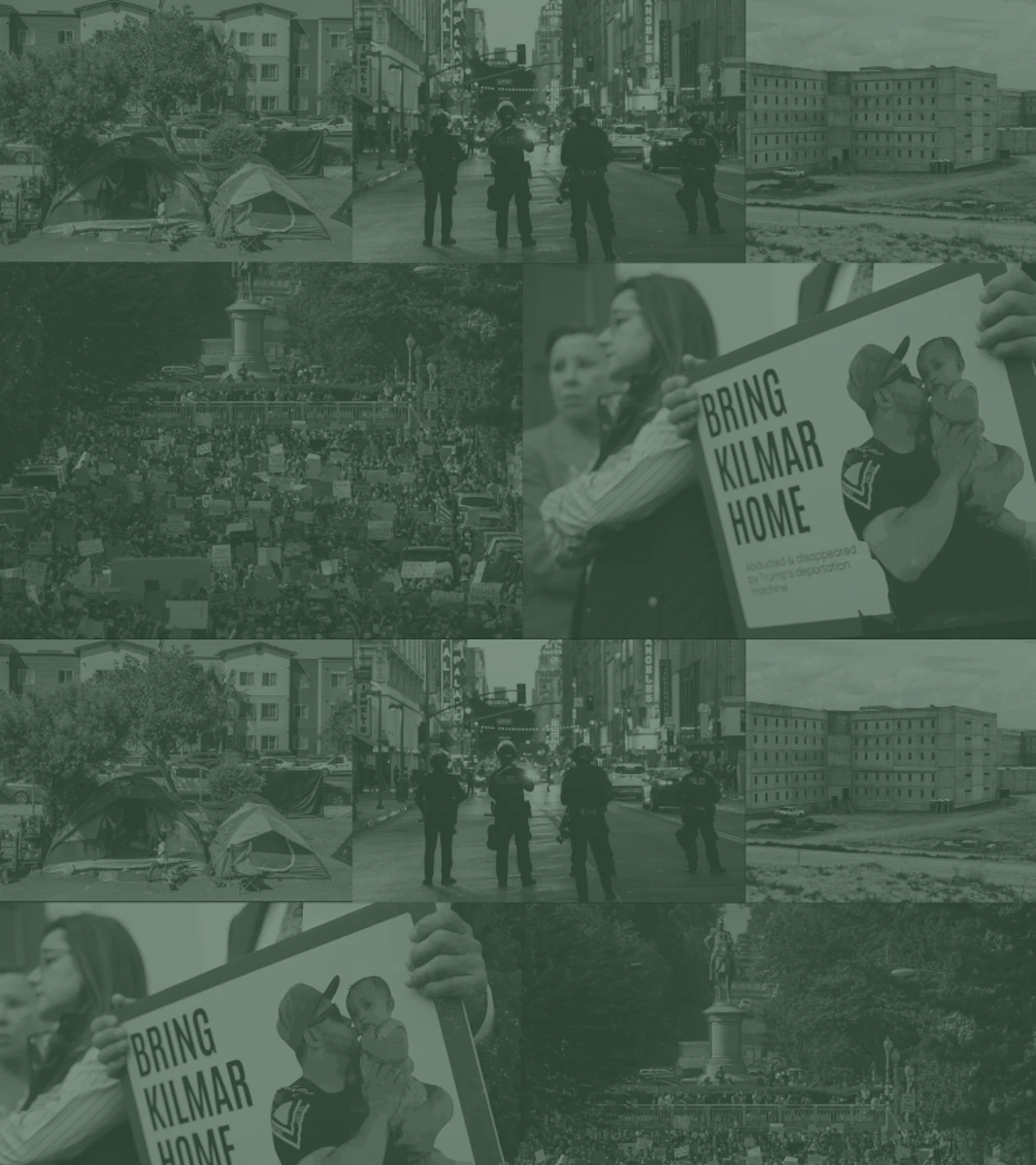
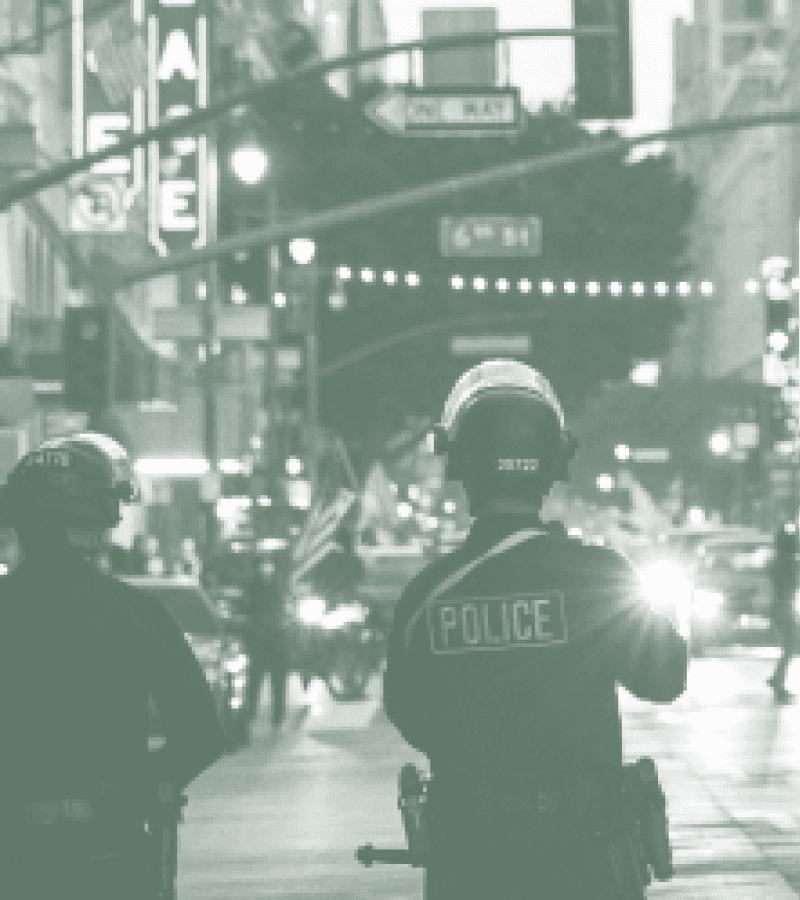
In the wake of the National Guard and Marines being deployed to downtown Los Angeles in response to protests condemning the mass disappearances of community members by ICE, all eyes remain on the city. In the deluge of live reporting from the protests, think pieces, court orders, and gubernatorial social media beefs, it’s easy to miss one of the core drivers of this crisis: quota-based enforcement.
On June 6, ICE agents arrested over 40 immigrants in workplace raids across Los Angeles, including dozens of garment workers at an apparel warehouse and day laborers in a Home Depot parking lot. These raids followed months of escalating tactics: arresting people who voluntarily appeared for immigration check-ins, handcuffing them at courtroom exits, and detaining entire families as “collateral” arrests.
The record first scratched for us following reports that these escalations stemmed from direct pressure from the Trump administration for ICE to hit daily quotas. Internal ICE emails obtained by The Guardian revealed that agents were explicitly encouraged to “push the envelope” and “turn the creative knob up to 11” to ensure they meet their 3,000 daily arrests target (a far cry from the average of 660 daily arrests during the first 100 days of Trump’s second term).
Let's Back Up
We know first-hand from our work in the criminal justice system that quotas are bad all-around. They incentivize law enforcement to arrest and detain for the sake of arrests and detention, they reward imprecise and biased enforcement, and they increase the likelihood of fraudulent and violent activity by law enforcement. As a result, the use of quotas has been broadly discredited in the criminal justice field. Over 20 states have banned quotas in some form or another, and experts across the spectrum, from academics to lawmakers to police themselves, question their effectiveness and fairness.
Still, quotas remain unfortunately common in policing. Roughly 4 in 10 rank-and-file police officers nationwide reported they were expected to meet a quota for arrests or tickets. So why do we still have them if they’ve been so commonly undermined? A big reason is financial. At least 20 states make police grant money dependent on traffic stop quotas, and many localities depend heavily on the revenue derived from the fines, fees, and forfeitures that flow from ticket quotas. The financial imperative to meet these quotas so drives officers’ attention to these specific infractions that it’s been shown to reduce clearance rates for violent crime.
In our immigration system, in addition to these recent ICE arrest quotas, Congress set a national minimum of 34,000 immigration detention beds in 2009 and although the quota was removed in 2017, we’ve long since surpassed those numbers. Similarly, ICE contracts with for-profit prison companies and publicly-run county jails routinely include minimum detention quotas, requiring ICE to pay for the beds regardless of need and incentivizing ever-more detention to keep them filled and make the agency appear more efficient.
As we continue to make sense of this political moment, spend just a minute with us on a few reasons to be very skeptical of enforcement quotas.
1. Quantity does not equal quality
Proponents of quotas claim they increase productivity in police officers and ensure they are doing their job. In practice, however, quotas often result in more falsification and misconduct rather than better policing or safety outcomes. And when officers are further incentivized to make arrests or write tickets without obvious (or sometimes any) cause, they often rely on bias to decide who looks like a threat.
NEW YORK CITY
- In New York, the city with the largest and one of the oldest municipal police departments in the country, officers trying to meet their quotas have admitted to misconduct ranging from issuing traffic tickets to dead people to planting cocaine on people.
- Analysis of the city’s infamous Stop-and-Frisk program — in which officers faced internal quotas or risked termination — found the program remarkably ineffective at reducing crime. Only 3% of stops resulted in any conviction and the number of stops that resulted in even an arrest was less than if the police had simply instituted random checkpoints.
- The quotas embedded within Stop-and-Frisk policing severely disproportionately impacted Black or Latino New Yorkers who made up over 80% of the millions of people the NYPD officers stopped. One police officer referred to the program as a mandate to “hunt[] Black and Hispanic people."
CHICAGO
- In Chicago, stop quotas were so brazen that officers were “required to make the same number of stops” each day, whether or not there was any criminal activity to justify them. Policies like these drove stunning racial disparities in enforcement. In 2013, Chicago PD was over four times more likely to search Black and Latino drivers than white drivers, even though white drivers were nearly twice as likely to be found with contraband. A 2020 investigative report found that Black and Latino people were involved in 90% of investigative stops over a two-year period.
2. Even Police Officers Don't Like Them
- Police unions ranging from the Policeman’s Benevolent Association to the Fraternal Order of Police have come out against quotas. Los Angeles County has paid out millions of dollars in numerous lawsuits brought by police officers who sued their police departments over illegal ticket quotas, stating that they were punished for not meeting numbers.
- Quotas further deteriorate relationships between police officers and community members by disincentivizing police from approaching their job any way other than punitively. One police officer said, "If I break up a fight between two boys and send them home, I don’t get credit. If I help deliver a baby in an emergency, I get no credit. But I score points if I issue a seat belt summons."
3. Quotas Lead to More Police Violence
- After the 2014 police killing of Mike Brown, the Department of Justice investigated the Ferguson Police Department and found that numbers-driven policing led directly to racially disparate police violence. The result? Nearly 90% of documented uses of force by Ferguson police were against Black people and police canines were deployed exclusively on Black people.
- A report from the Brennan Center for Justice details examples of officers whose violence and abuse occurred while under pressure to meet quotas, from Atlanta police who killed a 92- year-old Black woman while executing a no-knock warrant in 2006 to California Highway Patrol officers who beat a 76-year-old man after a 2015 traffic stop.
- Even if the immediate police interaction does not inflict violence, the ensuing arrest and jailing often do. When a Louisiana lieutenant was recorded demanding that "somebody has got to go to jail every 12 hours," he was not just reiterating an arrest quota. He also revealed the way that minimum occupancy requirements often operate as de facto quotas for local jails and privately run prisons.
Continue the Conversation
Read
- Police Quotas and Race and the Tragedy of Quota-Based Policing both by Shaun Ossei-Owusu
Watch
- This NYT Op-doc on the human consequences of New York’s Stop-and-Frisk policies through one young New Yorker’s story, and The Daily Show with Trevor Noah segment on police quotas
Follow
- Journalist Radley Balko on Substack

We can’t afford to scale up, export, or leave unchecked what we’ve already gotten wrong. We’ll be using this note to unpack the faulty thinking about crime, safety, and justice that underpins some of the most consequential discussions and decisions playing out in this American moment. You can find our previous notes here.
Subscribe to the newsletter
Loading...