Loading...
May 15, 2025
Just a Minute
on More Prisons
Bad premises beget worse policies. Spend just a minute with us so that we can do better.
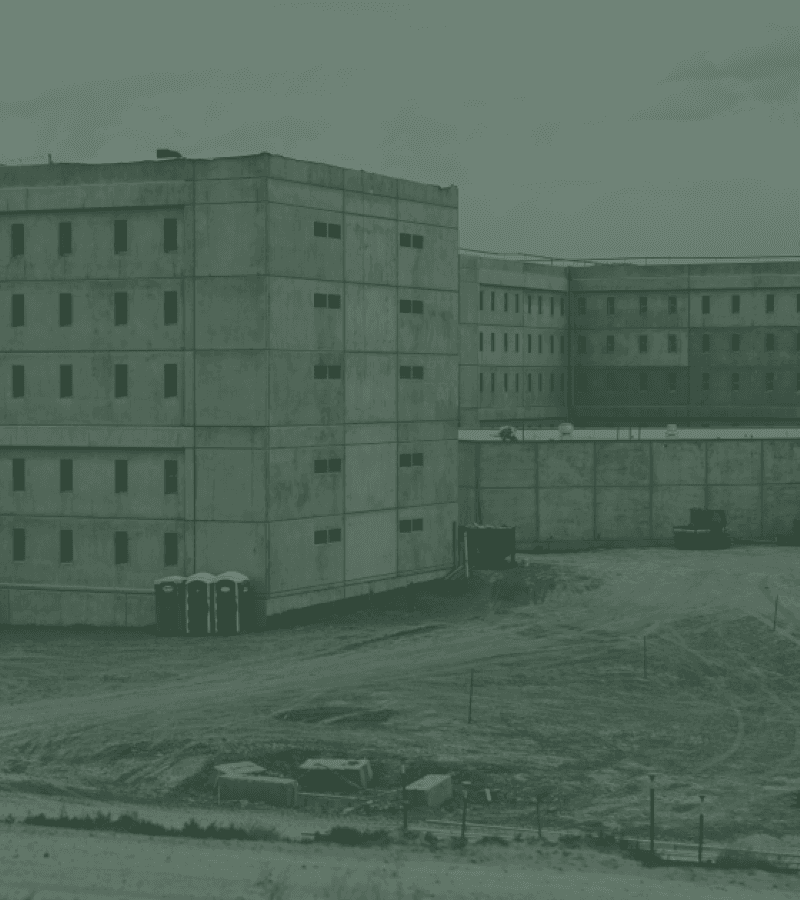
President Trump’s announcement that he’d like to reopen and expand Alcatraz is only the newest in a deeply concerning trend of proposals to build more, and re-open previously shuttered, prisons to incarcerate more people across our criminal justice and immigration systems.
The United States already has one of the highest incarceration rates in the world and the moral implications of that are clear to many. The well-documented and heartbreaking damage that our incarceration rates cause so many people—including the 1 in 2 Americans who have had a family member incarcerated—has health, financial, and emotional consequences that depress opportunity and widen racial and economic inequality over generations.
But today, we’re focusing on the dollars and cents of it all. Because the record first scratched for us when the people putting forth these proposals conveniently overlooked that we already have historical data on this investment strategy, and it's not at all good. The U.S. opened a new prison every 15 days between 1990 to 2005 and our prison population ballooned from nearly 700,000 to almost 1.4 million over this period. The wide-rippling fiscal, social, labor, and other ramifications of this prison boom drove the bipartisan movement for criminal justice reform that led to a 24% reduction in prison populations from 2009-2022 and the closure of nearly 200 prisons.
If we build them, we can almost certainly fill them–but we can’t seem to staff them, afford them, or deliver a public safety return on the investment.
Let's Back Up
1. We Can’t Afford Them
Building and operating prisons is staggeringly expensive. By the peak of the incarceration crisis, the U.S. had paid nearly $100 billion to build over 700 new prisons just for brick and mortar construction and related capital costs (we’re not talking operating costs). To finance the construction of these facilities, many states took out significant bonds that put years of stress on their budgets as they struggled to pay them back. For example, the state of Iowa financed the construction of the Iowa State Penitentiary with a $135 million bond issued in 2010 that Iowans will be paying back through 2027. Taxpayers are stuck with the bill for many of these bonds, on top of the steep operating costs, even when prison populations decline dramatically.
Especially now as many states consider slashing spending to counter shrinking tax revenues and growing deficits, it will be harder for lawmakers to make the math of costly prison expansions work. The Arkansas state senate rejected a bill to fund a potentially $1.2 billion dollar prison five different times. One legislator described the plan as a “mega-prison, mega-financial disaster death spiral.” In South Dakota, the House of Representatives recently rejected funding for a prison slated to cost $825 million, nearly $500 million more than its original estimate.
The projects that do get approved often come at the expense of vital services. Indiana is pursuing a $1.2 billion prison while their most recent budget included $2 billion in cuts, including a 60% cut for public health departments. Nebraska’s $350 million dollar prison development plan has already gone 30% over the initial estimate while the state’s severe deficit has lawmakers considering defunding Meals on Wheels, charging more fees at the DMV, and cutting funds for cancer screenings. A year after New Hampshire approved plans for a half a billion dollar prison, the legislature has proposed wide-ranging budget cuts including $80 million dollars from public higher education and $46 million dollars from the Department of Health and Human Services.
2. We Can’t Staff The Prisons We Already Have
We are already experiencing a massive prison staffing shortage with more people leaving corrections in recent years than any other state government sector. Nationwide, there has been a 10% decline in correctional officers from 2019-2022 and states like Georgia have seen up to a 29% decline during that period.
This shift has left states struggling, largely unsuccessfully, to manage their jails and prisons. Even before the staffing crisis, the state of our prisons and jails was such that correctional officers experience PTSD at higher levels than returning military veterans, and incarcerated men experience even higher rates. Understaffing has only caused conditions in jails and prisons to deteriorate further, compromising the safety of both incarcerated people and correctional officers and contributing to skyrocketing levels of violence, overdose, and suicide. This perpetuates a vicious cycle that leads even more corrections officers to quit. The inability to retain corrections officers has not been solved by states making massive overtime payments to staff, offering signing bonuses, or increasing wages and benefits. The situation is so dire that states like Florida, New York, and West Virginia have resorted to bringing in the National Guard to staff their prisons.
3. We Were Sold a Boom and Got a Sputter
Media and policymakers alike have described prison construction projects as economic boons with headlines like “Prisons: Economic Tonic for Rural Areas” and taglines like “salvation through incarceration.” However, decades of research now show that prisons have fallen significantly short of delivering the economic prosperity promised.
Towns that built prisons early on in the prison boom did experience some initial, short term economic benefits but those gains did not last, and a New York study comparing the economic outcomes of rural towns with and without prisons over 25 years found that the constructing and operating a prison did not have a meaningful positive impact on local economies.
Although often hailed as job creators for languishing towns, many prisons employ far more out of towners than people from the local community, and researchers “find no evidence that prisons bring employment growth to rural communities.” For counties with lower levels of educational attainment, prisons were associated with even worse employment outcomes, leading researchers to conclude that “prisons are doing more harm than good.”
4. We’re Not Even Getting A Return
There is very good evidence that shows we do not need more incarceration to have more safety. From 2012 to 2022, 45 states reduced imprisonment rates and crime rates simultaneously, and crime declined faster in these states than in the five states that increased imprisonment during that same period. Researchers reached consensus that locking someone up, as opposed to keeping them in the community, does not reduce their likelihood of committing crime in the future and in many cases increases it. Many other public safety justifications for prison have been called into question or fully debunked. The fact that increased criminalization and incarceration does not make us safer applies equally when talking about incarcerating and detaining immigrants. An evaluation of a nationwide program to increase detention of migrants who had been arrested for crimes found that it had no impact on the crime rate.
Continue the Conversation
Read
- Bloomberg’s recent coverage of small New Mexican towns that are staking their financial survival on privately owned ICE detention centers.
- The Marshall Project’s deep dive into the data on dire prison staffing shortages.
Listen
- To North County Public Radio’s interview with Jacob Harris on how New York’s prison boom “failed to live up to its promise of providing economic prosperity" and Upstate NY is paying the price.
Track
- Prison Policy Initiative on Bluesky for cutting-edge research and data about the nature and scope of incarceration and criminalization.

We can’t afford to scale up, export, or leave unchecked what we’ve already gotten wrong. We’ll be using this note to unpack the faulty thinking about crime, safety, and justice that underpins some of the most consequential discussions and decisions playing out in this American moment. You can find our previous notes here.
Subscribe to the newsletter
Loading...