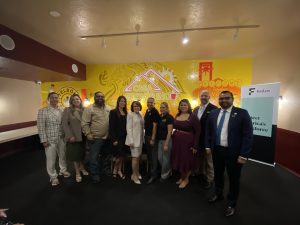
Las Vegas, Nevada – Yesterday, FWD.us, Dream Big Nevada, and Senator Jacky Rosen (D-NV) hosted a roundtable event to bring together business leaders, advocates, and other local leaders to highlight the importance of the Deferred Action for Childhood Arrivals (DACA) policy, highlight the major delays in work authorizations approvals, and the urgent need to protect its recipients to preserve their ability to contribute to Nevada’s workforce, economy and communities. The event included a state of play update from FWD.us and an engaging discussion from Senator Jacky Rosen and other participants around DACA’s significance to Nevada’s economy and workforce, and the uncertainty posed by ongoing legal challenges against the policy.
This comes as FWD.us recently released a new report on the DACA policy, “DACA 14 Years Later,” which highlights its impacts over the years and FWD.us’ new campaign to document and push back against the administration’s escalating attacks on DACA recipients.
Established in 2012, DACA was designed to protect immigrants who came to the U.S. with their families as children from deportation and give them access to education in the U.S. Today, many DACA recipients are no longer children. Most (99%) have a high school diploma or its equivalent, and nearly half (45%) have some college education. The overwhelming majority (89%) are in the labor force, and more than a third (36%) are married or have children (51%). Yet, despite these contributions, DACA recipients still lack a clear path to citizenship and remain uncertain about their futures as the policy continues to face legal threats.
There are approximately 10,000 DACA recipients in Nevada alone. The average age of a DACA recipient in Nevada is 33, and they have been in our country for an average of 27 years. Eighty-one percent of DACA recipients in Nevada are also part of our workforce, playing vital roles in key sectors of the state economy.

U.S. Senator Jacky Rosen: “The Administration’s ongoing attacks on DACA recipients, including detentions, deportations, and delays in DACA renewals, threaten the stability of Nevada families. That’s why I’ve been fighting against policies that make it harder for DACA recipients and other immigrants to work while their work authorization renewals are pending. This Administration has the power to stop these avoidable disruptions for workers, families, and employers across our state. Nevada’s economic wellbeing depends on hardworking individuals who contribute and help drive our economy. We should be focused on strengthening our workforce and economy, not disrupting communities and creating even more uncertainty for Nevada families and businesses.”
Mark Delich, Vice President of Government Relations, FWD.us: “DACA recipients play a critical role in the Nevada economy, workforce, and communities. Yet many are facing unnecessary delays in receiving or renewing their work authorization, creating uncertainty for workers, families, and employers alike. When people are unable to work due to government processing delays, businesses lose valued employees and families lose income. Nevada's economy is strongest when talented individuals are able to work, build careers, and continue contributing to the communities they call home.”
Astrid Silva, Executive Director, Dream Big Nevada: “For thousands of DACA recipients, DACA is more than just a work authorization, it is the ability to support our families, pursue our careers, and contribute to the country we call home. Delays in DACA renewals create unnecessary uncertainty for people who have built their lives here and are doing everything asked of them to comply with the program requirements. These delays affect workers, employers, and entire communities that depend on their contributions. Nevada is stronger because of the talent, resilience, and leadership of DACA recipients, and we must ensure they have the stability and opportunity to continue building their futures here.”
Nora Aguirre, National Association of Hispanic Real Estate Professionals (NAHREP): “Home ownership helps people build wealth and stability for their families. Delays in DACA renewals disrupt employment, create income uncertainty, and make it harder for families to pay or qualify for mortgages. Our economy and housing market don’t benefit from making it harder for DACA recipients to become homeowners. At a time when we should be helping hardworking people invest in their futures and communities, these delays are standing in the way of opportunity, wealth-building, and home ownership.”
Evan Louie, Business Leader: “As a business leader, I've seen firsthand how Nevada's success depends on recruiting and retaining a talented workforce from diverse backgrounds. DACA recipients are workers, entrepreneurs, students, and community leaders who contribute to our economy every day. The current uncertainty so many are experiencing due to unnecessary delays in DACA renewals is also an attack on businesses and companies that have invested in Nevada. Nevada cannot afford to sideline talented individuals who are ready and eager to power the state’s economy. Ensuring timely DACA renewals and other work authorization processing is about strengthening our workforce, supporting economic growth, and investing in the future of our communities.”
ADDITIONAL BACKGROUND
Key data points from FWD.us “DACA 14 Years Later” Report Include:
- Fourteen years after the creation of the Deferred Action for Childhood Arrivals (DACA) policy, DACA recipients have grown up and lived the majority of their lives in America: youth who started as mostly high school and college students are now building careers and establishing families.
- Fourteen years later, DACA’s beneficiaries have built families and careers in the U.S.
- Eighty-nine percent of DACA recipients are in the labor force.
- The average income of DACA recipients is $46,000.
- Ninety-nine percent of DACA recipients have finished high school.
- Forty-five percent of DACA recipients have completed some college education.
- Thirty-six percent of DACA recipients are married, and 51 percent have children.
- Today, more than 500,000 DACA recipients are building careers and growing their families across the U.S.
Additionally, in Nevada alone, DACA recipients are building lives and families.
- 10,000 DACA recipients live in Nevada.
- The average age of DACA recipients in Nevada is 33 years old, and on average they have been in the U.S. for 27 years.
- Eighty-one percent of Nevada DACA recipients are in the labor force.