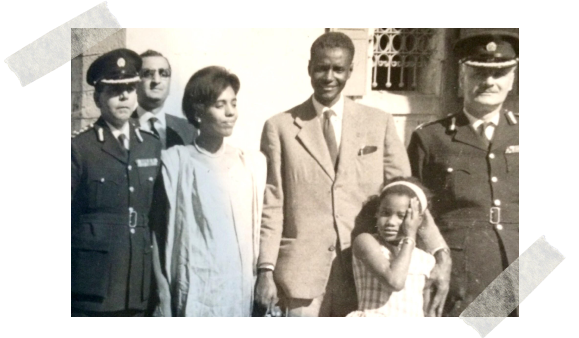
My grandmother didn’t find out until the next day that he had been taken to Pademba Road Prison, at the behest of a President who did not take kindly to the tens of thousands of people supporting the new political party my grandfather co-founded in response to the regime's rising authoritarianism.
LONDON, ENGLAND · 1961
Ten years earlier, a British man named Peter Benenson opened his morning newspaper on the London Underground and read about two students in Portugal sentenced to seven years in prison by the authoritarian Estado Novo regime, simply for raising a toast to freedom.
The story moved him to act. He wrote an appeal, published in The Observer, calling on ordinary people around the world to support political prisoners by writing letters demanding their release. The piece went the 1960s equivalent of viral. Thousands of people heeded the call, forming letter-writing groups that would eventually become Amnesty International.
AMNESTY FOR THE PEOPLE, BY THE PEOPLE
Less than two years later, Amnesty campaigns freed their first prisoner: Ukrainian Archbishop Josyf Slipyi, who had been incarcerated in Siberia. A decade after that first release and six months after my Grandpa was thrown into Pademba Road Prison, Amnesty International featured him as “prisoner of the month” and launched a letter-writing campaign that led to his release, shortly before the state ordered the execution of the comrade arrested alongside him.
This story could have ended very differently. How many times have we seen something upsetting in the news and moved on with our lives, assuming powerlessness? But two things transformed a moment as ordinary as a man reading the paper on his daily commute into something that has freed tens of thousands of people from incarceration.
The first is the magic that comes simply from trying: from closing the gap between hearing about injustice and acting on it. Peter Benenson had no silver bullet to free those Portuguese students, but the fact that he felt compelled to do something made everything else possible. The second is the power of everyday people. He did not appeal to the powers that be; he invited ordinary people to take modest but meaningful actions. Actions that have generated over 50 million letters, emails, and petitions from more than ten million people worldwide. Actions that allowed my grandfather to live well and long, and die old and free. Actions that meant I got to know him.