This was the state of the Leesburg Stockade in the summer of 1963, the year the Civil Rights Movement came to Sumter County, Georgia. The local jails were full, packed with the hundreds of Black organizers registering voters and engaging in direct actions. So when fifteen girls aged 12 to 15 were arrested for trying to desegregate their local movie theater, cops drove them to the abandoned Civil War-era stockade twenty miles away. Denied even one phone call, the girls spent over six weeks incarcerated there. Law enforcement wouldn’t tell their parents where they were or even confirm they were alive. But a few young organizers and a 21-year-old SNCC photographer chased down rumors, located the girls and snapped a few pictures of them through the barred windows. Those photos gained national media attention and ultimately resulted in their release.
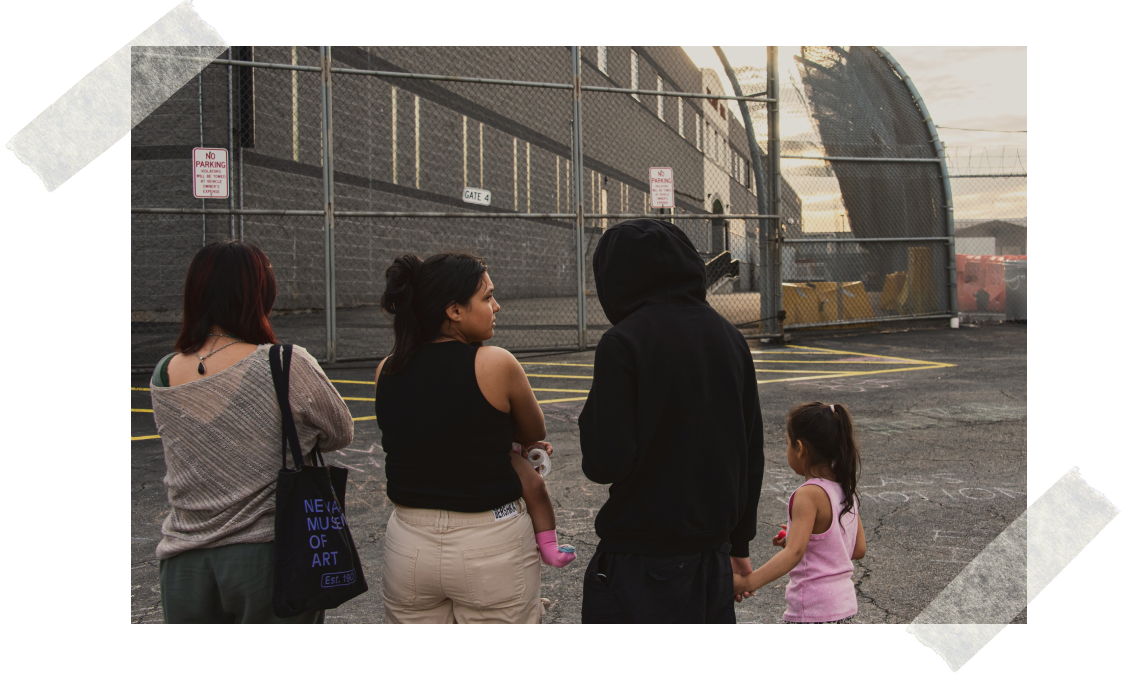
More than sixty years later, the government is still disappearing people. And communities are still finding ingenious ways to track them down, reconnect them with their families, and fight for their release. In San Diego, volunteers with the Otay Mesa Detention Collective (recently profiled on This American Life) gather outside the detention center every week to communicate with as many of the 1,300+ immigrants incarcerated inside as they can. Many of the detained arrive at Otay Mesa with nothing after being snatched off the street or from their homes or places of work. Many of their families don't know where they are. And because the center charges for every call and text, the people inside often have no way to reach them.
One day, some people inside the detention center began yelling and trying to communicate with the group of people who led a weekly vigil outside. One incarcerated innovator went so far as to throw a written message wrapped around a lotion bottle over two barbed wire fences to reach the vigil attendees. What started as ad-hoc attempts developed into a massively successful, albeit crude, communication system between incarcerated immigrants and organizers outside.
The goal? To get information about the people incarcerated, most crucially their names and “A-Numbers” (identification numbers assigned to non-citizens by DHS). With that information, organizers and volunteers with the Collective can track people inside and immediately put money in their accounts, enabling them to contact their families and lawyers.
Sometimes people inside throw notes wrapped around lotion, shampoo and deodorant bottles (and at least one has thrown a battery). Sometimes they simply yell, either across the yard or through a drainage hole, toward folks with the Collective who use a listening device to better hear them. The Collective’s volunteers can translate in at least 13 languages and viral posts of these exchanges have reunited families who spent weeks not knowing where their loved one was. Since the detention center cracked down on the cruder communications methods, the Collective and hundreds of folks inside now talk primarily via the facility’s text service. Detained people already connected to the Collective will send them the A-Numbers of newly detained people, continuing the cycle.
Just like a Southern farmer who snuck a batch of his peanuts to the girls in the Leesburg Stockade, who had not had any fruit, vegetables or legumes in weeks, the Otay Mesa Detention Collective has given tamales and fruit to visiting families while blasting songs requested by folks inside. Because almost as important as the practical work of finding people who have been disappeared is the tender work of being the one who reminds them they are not alone.