Loading...
January 27, 2026
Just a Minute
on Body-Worn Cameras
Bad premises beget worse policies. Spend just a minute with us so that we can do better.
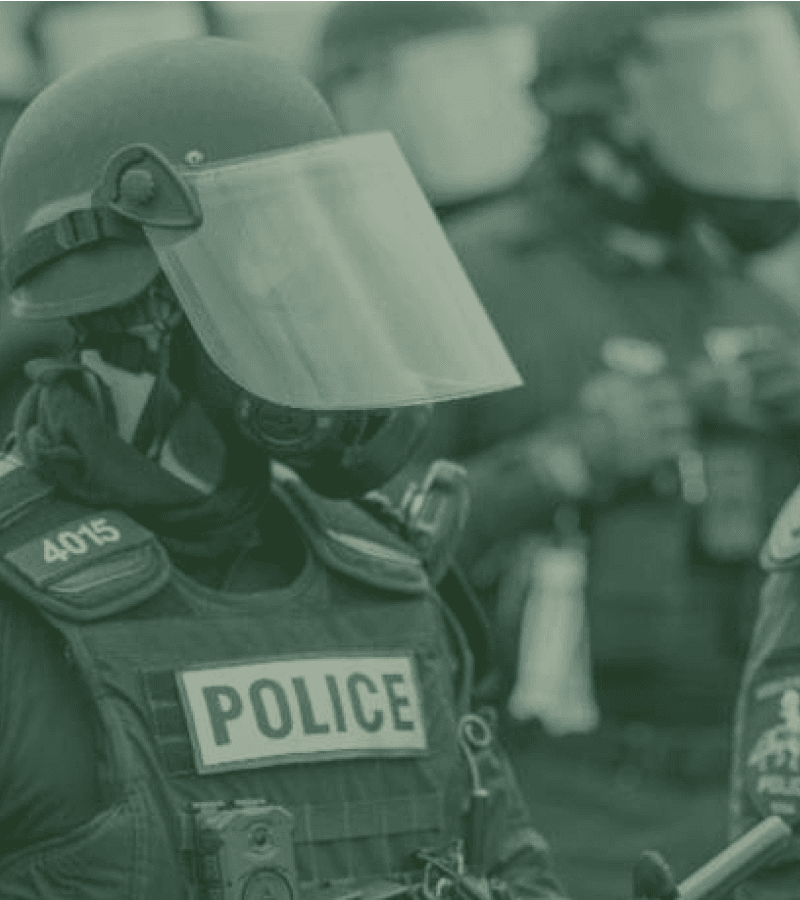
Three days after Alex Pretti’s death at the hands of federal immigration enforcement agents in Minneapolis, just weeks after the killing of Renee Good, and with mounting reports of law enforcement brutality, many are rightfully searching for ways to stop the escalating violence. One proposal is requiring ICE agents to use body-worn cameras. Congressional Democrats have introduced resolutions and legislation to require all federal immigration agents to use body-worn cameras, and Republicans have offered $20 million for body-worn cameras for immigration agents amid negotiations on the appropriations bill ahead of the latest government shutdown deadline. But the data on whether body-worn cameras effectively reduce police violence is mixed, at best.
Let's Back Up
This is not the first time body-worn cameras have been offered up as a solution to endemic law enforcement violence. In the wake of the killing of Michael Brown in 2013, policymakers and police departments held up body-worn cameras as the path forward. Editorial boards joined the chorus (see Washington Post: “The promise of body cameras”). Even then, some advocates and experts warned that body-worn cameras were unlikely to solve the problem of law enforcement violence and had significant downsides.
Over a decade later with 80 percent of large police departments in the U.S. now having acquired body-worn cameras, it’s safe to say body-worn cameras have not delivered on their lofty promise. The Department of Justice itself has acknowledged that the data on body-worn cameras' impact on use of force is inconsistent. Body-worn cameras are also expensive (the data storage alone for footage can cost millions a year) and have been used to justify increases to already massive police budgets. In addition, the camera’s footage is frequently controlled, delayed, selectively released, or weaponized to shield officers from accountability rather than to provide transparency. Perhaps worst of all, the cameras have become another mechanism through which law enforcement actively expands its capacity to surveil the very people these tools were purported to safeguard.
As we confront the urgent question of how to spend our resources and political capital to protect those under attack—immigrants, marginalized communities, and those who have organized to protect, protest or simply bear witness to the terror inflicted on their neighbors—we must be cleareyed about what strategies will actually make people safer. So spend just a minute with us on three serious limits and liabilities of body-worn cameras:
1. The evidence that body-worn cameras reduce use of force is mixed, at best
Body-worn cameras have been extensively studied, but the evidence of their impact remains inconsistent. Some studies, including a recent systematic review, reported a decline in police use of force when cameras are worn. Many other studies, including more recent research, find no meaningful change in use of force, and some have even found increases following camera adoption. Most importantly, police killings have actually gone up since the use of body-worn cameras became the norm in major police departments. Mapping Police Violence found that police killed 1,314 people in 2025 – 286 more than the 1,028 people killed by police in 2014. In fact, multiple officers at the scene of Alex Pretti’s killing in Minneapolis on Saturday were using body-worn cameras, and the violence continued.
2. Footage ≠ transparency or accountability
Body-worn cameras can provide close-up footage of law enforcement interactions with the public. In some cases, that footage has been useful. But in the iPhone era, an absence of video evidence is far from the primary barrier to ending police violence. Clear footage of law enforcement brutalizing people captured from multiple angles by bystanders and journalists alike has become disturbingly common.
So what’s the problem? Body-worn cameras do not challenge the structural impunity embedded within the culture and operation of police departments. Cameras are only worthwhile if they are consistently used, and if the footage is reliably accessible and used to hold officers to account. Officers can, and frequently do, turn their cameras on late, off early, or not on at all. A 2025 audit of the Philadelphia Police Department found that during vehicle stops, officers activated body-worn cameras late or deactivated them early roughly 40 percent of the time.
Even when misconduct is captured, departments routinely fail to take meaningful action to prevent future harm. Three years before Derek Chauvin killed George Floyd by kneeling on his neck in 2020, he was repeatedly recorded on body-worn camera footage using the same dangerous restraint on other people, including a woman and a 14-yearold boy whom he choked until he lost consciousness. Supervisors who saw the footage did nothing to stop the behavior.
In some cases, police departments and even local governments go as far as to actively withhold or mislead the public about incriminating footage. After the police killing of 17-year-old Laquan McDonald in Chicago, widespread protests erupted when it was revealed that dashboard camera footage had been concealed from his family and the public for more than a year. A ProPublica investigation examining 101 police killings in a single month in June 2022 found that although bodyworn cameras were used in 79 cases, footage was released in only 33 of them—often more than a year later.
3. What else are body-worn cameras used for? Surveilling the public.
Contrary to their stated purpose, body-worn cameras are actually thriving as tools to surveil and prosecute civilians. A survey of prosecutors found that more than 90 percent of jurisdictions using body-worn cameras reported using that footage to prosecute civilians, while just 8 percent used it to prosecute police officers. This reality is especially dangerous in a political moment defined by intensified efforts to repress protest and organizing, and an ever-expanding definition of what types of speech are deemed unacceptable. Body-worn cameras expand the state's ability to monitor, catalog, and criminalize anybody. And the risks are only growing. The integration of facial recognition technology into body-worn cameras is already here. The company that controls roughly 85 percent of the body-worn camera market is actively piloting facial recognition software, after previously pledging to pause its use due to ethical concerns.
And just when it couldn’t get more ominous, these developments are unfolding alongside explicit calls for public retaliation against protesters. White House “border czar” Tom Homan has recently suggested creating a public database displaying the faces of civilian protesters, encouraging employers, social networks, and the broader internet to punish or dox individuals accused of “interfering with” or “impeding” federal immigration enforcement.
Continue the Conversation
Read
- The Body Camera: The Language of our Dreams by Alec Karakatsanis, breaking down the framing of body-worn cameras as “reform” in response to police violence to expand police budgets and extend surveillance.
- Axon’s Reaping: How Police Brutality Has Become a Moneymaker, a deeper look at the Arizona-based weapons manufacturer that managed to generate billions after shifting the marketing of its body-worn cameras from evidence-gathering tools to “protect” and “exonerate” officers to “a silver bullet solution to police brutality.”
Listen
- Investigative journalists from ProPublica and the New York Times describe The Failed Promise of Body-Worn Cameras on the podcast The Daily.
Act
- Visit www.standwithminnesota.com to find ways to support Minnesotans organizing to protect their communities.
- Read FWD.us memo highlighting other, better policy proposals to increase accountability and take action against abuses of power and unchecked violence at the hands of ICE, CBP and other federal law enforcement.

We can’t afford to scale up, export, or leave unchecked what we’ve already gotten wrong. We’ll be using this note to unpack the faulty thinking about crime, safety, and justice that underpins some of the most consequential discussions and decisions playing out in this American moment.
Subscribe to the newsletter
Loading...