


330,000 Haitian Temporary Protected Status (TPS) holders live across the U.S.







Haitian TPS holders contribute an estimated $5.9 billion to the U.S. economy each year, and annually pay $805 million in federal and payroll taxes and $755 million in state and local taxes.
Haitian TPS holders contribute billions of dollars each year to metro economies.
| Miami | $1.5 billion |
| New York | $1.1 billion |
| Boston | $418 million |
| Orlando | $329 million |
| Tampa | $125 million |
| Atlanta | $119 million |
Haitian TPS holders contribute millions of dollars each year to mid-sized cities.
| Allentown, PA | $197 million |
| Indianapolis, IN | $136 million |
| Port St. Lucie, FL | $134 million |
| Springfield, OH | $91 million |
| Jacksonville, FL | $56 million |
| Columbus, OH | $44 million |
200,000 Haitian TPS holders are already in the U.S. workforce.
Forcing Haitian TPS holders out of their jobs would drive up costs for everyday Americans, raising the prices of food, goods, health care, and critical services.
















50,000 U.S. citizen children depend on their Haitian TPS parents' contributions to the U.S. workforce. Without their parent's income, 25,000 U.S. citizen children would be pushed into poverty.
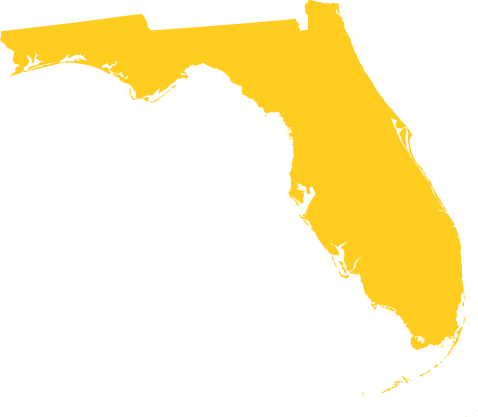
Haitian TPS holders strengthen states across the U.S.
We must ensure TPS for Haiti continues.
Our economy and families rely on it.
Data, Methods, Notes
Population and worker estimates are based on augmented 2024 American Community Survey (ACS). Number of TPS holders is as of early 2025 before initial efforts by the Trump administration to terminate the TPS designation for Haiti. All estimates were prepared by Dr. Phillip Connor, research fellow at Princeton University. See phillip-connor.com for more information on the ACS methodology.
Economic contribution is the total annual income after the payment of taxes. Federal and payroll taxes are based on tax rates from the Congressional Budget Office. State and local taxes are derived from the Institute on Taxation and Economic Policy's state tax rates and include all forms of state and local taxation. States and metros are top locations of residence for Haitian TPS holders as derived from the ACS analysis.
Occupational categories were collapsed to provide meaningful groups, rounded to thousands. Descriptions of worker services and produced goods are based on researched multipliers and are conservative estimates. Meal count is based on 5 meals per labor hour for daily 8 hour shifts. Maximum work capacity for a cashier is 30-40 transactions per hour, but conservatively limited to 10 per hour for an 8 hour daily shift. Parcels delivered each day is based on 100 packages per day. People moved each day is based on 2 passengers per hour for 8 hours daily. Patients served daily by nursing assistants is based on a 1:5 nurse to patient ratio. Each agricultural worker is assumed to harvest a third of an acre each day. Security guards are assumed to work under a 1:100 person ratio. Caregivers are assumed to care for 1.5 people daily. Mid-professional vehicle cleaners detail about 5 to 7 cars each day. Hotel staff clean 12 rooms per day. A property manager manages 50 units in a building. Mechanic bays service 2.2 cars per day. Landscapers are assumed to maintain 10 properties per day per worker for a 5 day work week. School assistants are assumed to support the nation's average class size of 19.
The number of U.S. citizen children pushed into poverty currently live above the poverty line in their communities but with the loss of their parent's income would be pushed into poverty. Listed occupations for each state are top occupations of Haitian TPS holders.