Parker and his neighbors developed intelligence networks to track slave catchers’ whereabouts, and blew a horn to signal when it was time to assemble against an approaching threat.
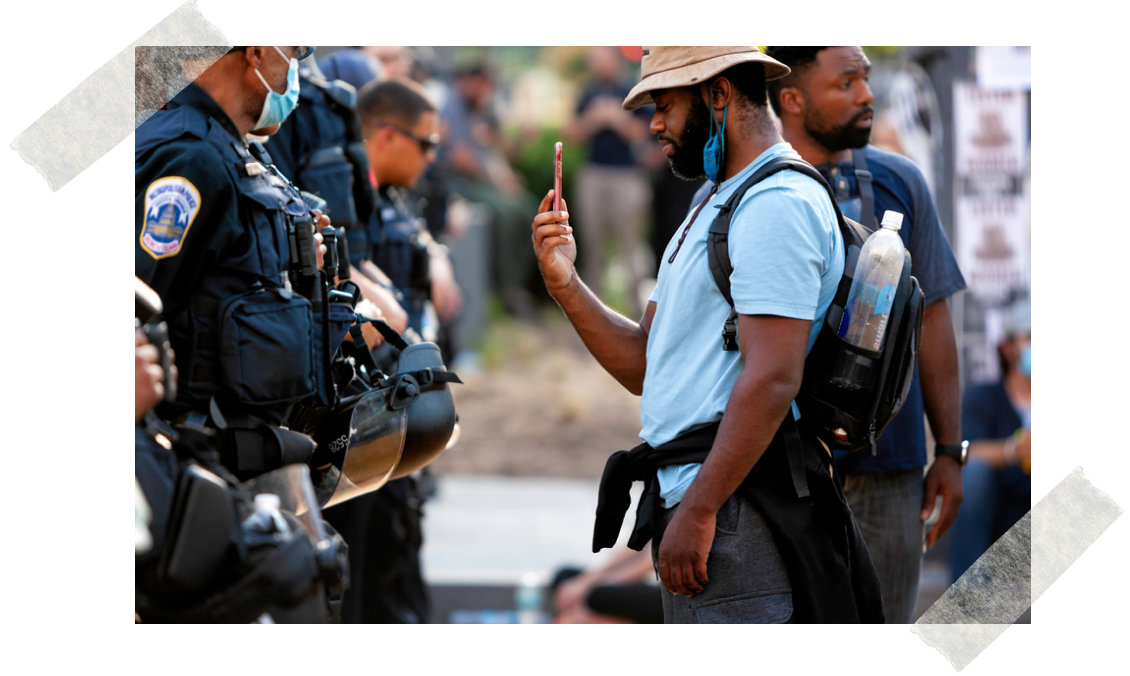
Groups across the country who have mobilized to protect their communities from raids and kidnappings through ICE watching use a different kind of horn–a cell phone– to coordinate their massively successful effort to protect their communities from ICE raids. Some of these groups are organized so that community members can call or text a rapid response network if they spot ICE activity, and volunteers will come to the scene to document enforcement operations and inform anyone being detained of their legal rights. One organizer described her Southern California ICE watch network as so expansive that “someone can usually get there within minutes.” Sometimes, community witnessing can stop the arrest altogether. We’ve all seen a video of a crowd forming to watch an ICE encounter, standing in solidarity with the person ICE is targeting, phones out and voicing their disapproval, until the agents give up and leave.
When people are detained, volunteers for ICE watch groups are often among the first to contact their families. With ICE sometimes deporting people within days of kidnapping them, time is of the essence. The faster families know, the faster they can locate their loved one and try to intervene by calling a lawyer, bringing necessary documents or getting the larger community involved.
Some groups also conduct neighborhood watch patrols, posting on social media in real time when they see agents to give residents a heads up. Individual neighborhoods, apartment complexes, and school communities maintain their own group chats to share real-time information; texts like “I was just at X gas station, it’s clear” and “there are three suspicious cars parked on the corner of…”
This work is not limited to this political moment or even to ICE. People have been watching the watchers for as long as there have been watchers: neighbors stepping outside to bear witness to an arrest, the Black Panthers patrolling Oakland with law books and cameras, organized Copwatch chapters walking their own blocks to monitor police activity since 1990. William Parker’s horn has never stopped blowing and people have never stopped picking it up.