Loading...
April 20, 2026
Just a Minute
on Detention Warehouses
Bad premises beget worse policies. Spend just a minute with us so that we can do better.
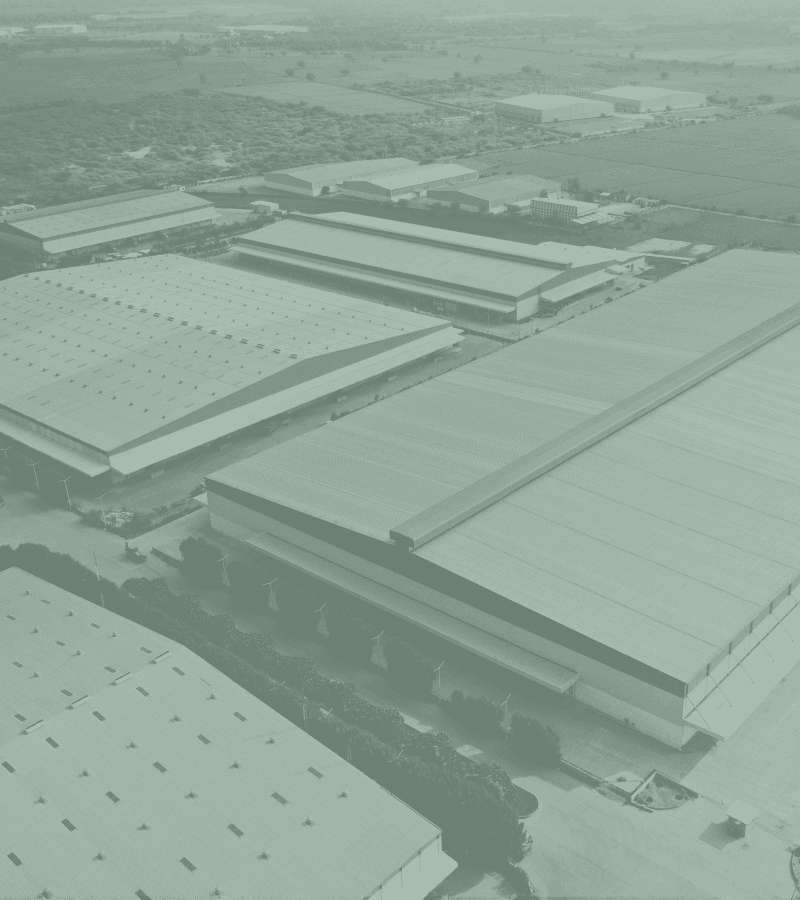
Warehouses. A word usually reserved for industrial storage spaces is increasingly appearing in headlines about people, as the Trump administration advances its so-called “Detention Reengineering Initiative.” The vision? To rapidly build an industrial mass detention infrastructure that detains, processes, and deports immigrants as quickly and cheaply as possible. The administration is moving the plan at a breakneck pace intended to overwhelm resistance, yet communities have already stopped 13 warehouse purchases and policymakers and advocates have thwarted the administration’s efforts in states across the country.
Let's Back Up
Over the last several months, the Trump Administration has been scouting and acquiring massive vacant commercial warehouses and large industrial spaces, the types of places used for storing and distributing commercial goods like furniture and appliances, for the purpose of detaining and processing immigrants for deportations. Per Detention Watch Network and others, DHS and ICE plan to buy and convert approximately 23 warehouses that will each be expected to hold between 1,000 and 10,000 people.
How far have they gotten? As of April 16, ICE had purchased 10 warehouses, expanding detention capacity by 41,500 beds (just about halfway to their goal of 92,600 additional beds). For context: that's more than the roughly 40,000 people total held in immigration detention when Trump took office. This additional capacity comes on top of a 91% increase in ICE detention capacity, along with an over 75% increase in people detained from January 2025 to January 2026.
The bill? One billion dollars and counting, an enormous sum that barely dents the $45 billion dollars ICE has received from Congress *specifically for new detention centers* through the One Big Beautiful Bill Act (as of February, we estimated that DHS still had roughly $150 billion in unspent money from that windfall). In fact, ICE has so much money that they are paying well above market value just to secure these deals. These astronomical sums are a stark reminder of the stakes of federal funding fights involving ICE.
This is a new play from a familiar playbook. Whether it's called a jail, prison, or detention center, it runs on similar logic, benefits many of the same political and financial interests, and has the same devastating consequences for communities.
But this is not our first rodeo and the movement to end mass incarceration has given us decades of lessons on how to fight investments in and expansions of incarceration. So spend just a minute with us on just a few of the strategies that have and are working to resist new prisons, jails, and detention centers:
We've Done It Before
Just last year, The National Council of Incarcerated and Formerly Incarcerated Women and Girls blocked a $90 million women's prison in Vermont, mobilizing a grassroots campaign that convinced the county's Planning Committee to deny the rezoning needed for construction. And they aren’t stopping there. They are backing legislation in Massachusetts imposing a five-year moratorium on new prison, jail and “correctional” construction. The bill passed the legislature in 2022 but was vetoed by the former governor. However, it’s been reintroduced and the movement behind it is only growing stronger.
Deep in Appalachia, locals and incarcerated people in Letcher County, Kentucky have spent decades successfully fighting against a federal prison. In 2016, a coalition of locals, environmentalists, incarcerated people and prisoners’ rights advocates began a campaign that organized people around the prison’s risks to public health and the environment. They filed challenges to the Bureau of Prisons’ environmental assessments, and ultimately sued BOP in 2018 for violating the National Environmental Policy Act and the Administrative Procedures Act. In 2019, the Bureau of Prisons rescinded their decision to build the prison.
Four years later when the BOP revived their proposal, the coalition answered by assisting an Indigenous land restoration group to purchase 63 acres, including the proposed site, as a strategy to block the build. Their fight continues to this day.
And It's Still Working Now…
Sales of warehouses to the government have been blocked using grassroots public pressure campaigns. In Kansas City, less than two months after locals received confirmation of ICE’s plan to buy a warehouse in South Kansas City, coordinated action from faith leaders, immigrants rights advocates and local groups like Stand Up KC and Missouri Workers Center, successfully pressured the developer who owned the warehouse to halt the sale.
Economic pressure has also proved effective in the fight against warehouses. After billionaire Jim Pattinson’s development group faced backlash over plans to lease a Virginia warehouse to ICE—including threats of boycotts and suspended media buys to all Pattinson Group entities—the company canceled the sale to the Department of Homeland Security. In Oklahoma, the Choctaw Nation publicly opposed and recently purchased an empty Big Lots distribution center after rumors that DHS planned to use the facility for ICE detention.
Legal strategies and environmental plays are working too. After ICE purchased a warehouse in Williamsport, Maryland, the state AG sued DHS partially on environmental law grounds and the Maryland Department of Environment issued a binding order barring the county from expanding its sewer system to accommodate the planned warehouse. Amidst intense local opposition in Social Circle, Georgia and in Utah, efforts were made to use environmental and municipal policies to—at least for now—stop new jails that would have warehoused nearly 20,000 individuals in just these two sites.
Conclusion
Prison and jail infrastructure, once built, often lives many lives. As the saying goes: if you build it, they’ll fill it. So-called "zombie prisons," closed after years of advocacy, are now being reopened to detain immigrants. A jail in Atlanta built in 1995 as a “pressure valve” to accommodate projected crime during the 1996 crime wave still operates today despite Atlanta City Council passing and the Mayor signing legislation authorizing its closure in 2019 and a population that got as low as 25 people in 2020. The fight to stop warehouses matters not only for the present, but for the future.
Continue the Conversation
Join
The Communities Not Cages ‘National Day of Action to Stop ICE Warehouse Detention’ on April 25th.
Follow
Detention Watch Network on Instagram and Facebook.
Watch
Calls from Home, an award-winning documentary that highlights organizing against rural prisons by following the weekly broadcast of a radio show sending familial messages of love to people incarcerated in Central Appalachia.
Track
ICE warehouse purchases with Project Saltbox.

We can’t afford to scale up, export, or leave unchecked what we’ve already gotten wrong. We’ll be using this note to unpack the faulty thinking about crime, safety, and justice that underpins some of the most consequential discussions and decisions playing out in this American moment.
Tell the world; share this article via...

Subscribe to the newsletter
Loading...