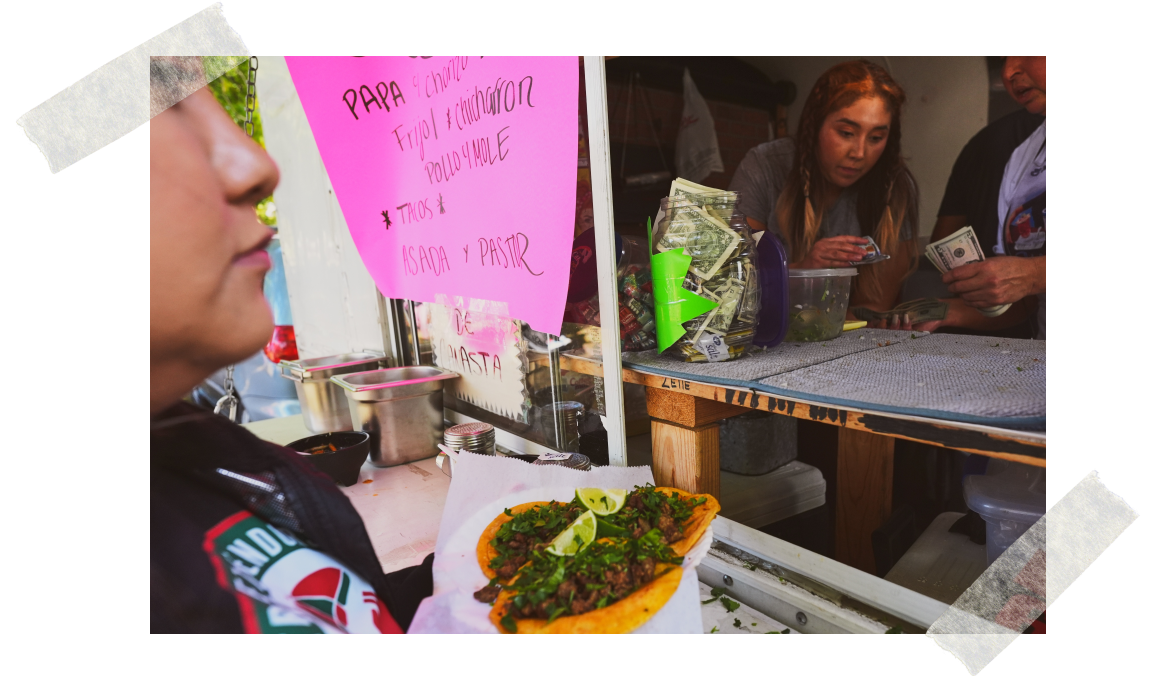
People whose work kept them outside and visible were particularly vulnerable: street vendors, car washers, day laborers, and farm workers. As videos surfaced and word spread of vendors and laborers being taken en masse, many people stopped going to work. Sidewalks that usually overflowed with taco carts, fruit stands, arepa trucks, and paleta carts were deserted. The Home Depot parking lots where day laborers usually gathered stood empty.
Thousands marched in the streets to demand the federal government withdraw its agents from the city. But for as long as they remained, Angelenos found a more immediate way to protect their immigrant neighbors: they paid them to stay home. Across the city, people organized to buy out street vendors and replace the wages of day laborers and car washers so they did not have to choose between risking abduction or being unable to make rent or feed their families. Some folks simply walked up to their local vendor and bought a day's worth of flowers or popsicles so the seller could go home. Others gave to organized efforts like the CLEAN Carwash Worker Center’s “Car Wash Worker Solidarity Fund,” which sends money directly to car washers and their families. Neighborhood groups like Aetna Street Solidarity and K-Town for All raised tens of thousands of dollars to support local vendors, including buying out their food and distributing it to local families.
None of this stopped the raids. But it helped make the city more raid-proof. More people in their homes meant more protection from ICE agents who cannot legally enter a home without a signed judicial warrant. More people out of sight meant more people out of ICE detention and deportation.